
#RecipeUpTop (details below):
- 1 whole chicken
- 3 lemons
- 1 cup chicken stock
- 1 shallot
- 5 cloves garlic
- 2 tablespoons vegetable (or other neutral) oil
- 1 tablespoon turmeric powder
- 1 tablespoon garlic powder
- 1 tablespoon onion powder
- 1 teaspoon tomato paste
- 1 teaspoon Dijon mustard
- Sugar (variable)
- Salt (variable)
- Fresh parsley or green onion (optional)
Method: Break down the chicken into desired cuts, retaining the scraps for stock. Brine the chicken in a salt-sugar solution of 6% by weight (if overnight) or 10% (if same-day). Remove chicken from brine and brown in a braising vessel. Sweat the shallots and garlic in the rendered chicken fat, add the stock, tomato paste, and the zest and juice of two (2) lemons. Braise covered in a 350F oven for thirty (30) minutes, then remove the lid and roast an additional thirty (30) minutes at 450F. Remove the chicken, and to the remaining braising liquid add the Dijon mustard and the juice and zest of the final lemon. Taste and adjust for salt, then serve.
THE DETAILS
Somewhere in his late forties, my father (God rest his soul) decided to start cooking. Now, I’ll take care to point out he didn’t endeavor to learn how to cook, but rather… well, he just started doing it. As for why, I can’t say for certain but I harbor a deep suspicion it had something to do with cable TV coming to rural Maine, and the fever-dream that was mid-90’s food network. But I digress.
As one might imagine, this new hobby produced a variety of results ranging from culinary atrocity to “hey, we can actually eat this one,” to – rarely – “well I’ll be damned, he might be on to something.” In the end, lemon chicken was the clear champion of the era.
To be clear, this is not that recipe. I don’t know where he found his method, but I do know it took an entire day, every dish in the kitchen, and a whole orchard of lemons. It also was, unfortunately, a single note of somewhat-dulled lemon at the end of the day. All that said, we were always happy for him to make it.
And so, in the deep, dark nostalgia of winter, I found myself remembering the clatter of pots and pans over the blaring of “Emeril Live!” and decided to, well, fix it. The result is a recipe that can be made on a weeknight, with only three (3) lemons, and results in bright, astringent acidity with a deep umami and herbaceous background, melt-off-the-bone chicken, and only uses one (1) pan. And, like everything here on the blog, it’s cheap, easy, and wrings every ounce of flavor out of our ingredients. So, let’s cook.
Step 1: Break down the bird
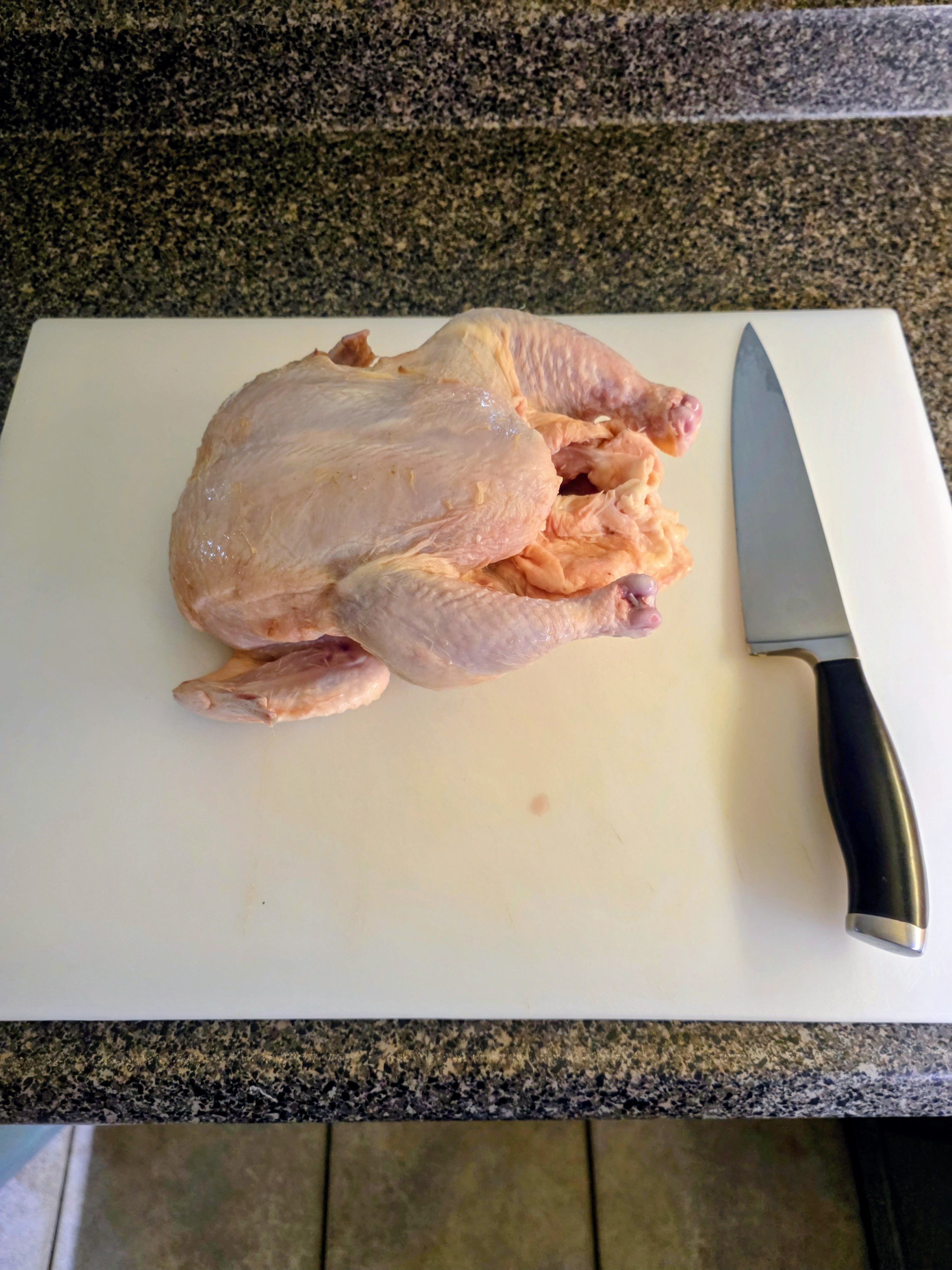
If you’re a fan of the blog, you know this drill already. I can’t remember the last time I bought chicken in any configuration other than whole, but yes, you could buy all these pieces individually along with some chicken stock. It’ll be more expensive, and a little bit faster, but honestly, it’s worth the ten minutes of learning how to cut one of these up.
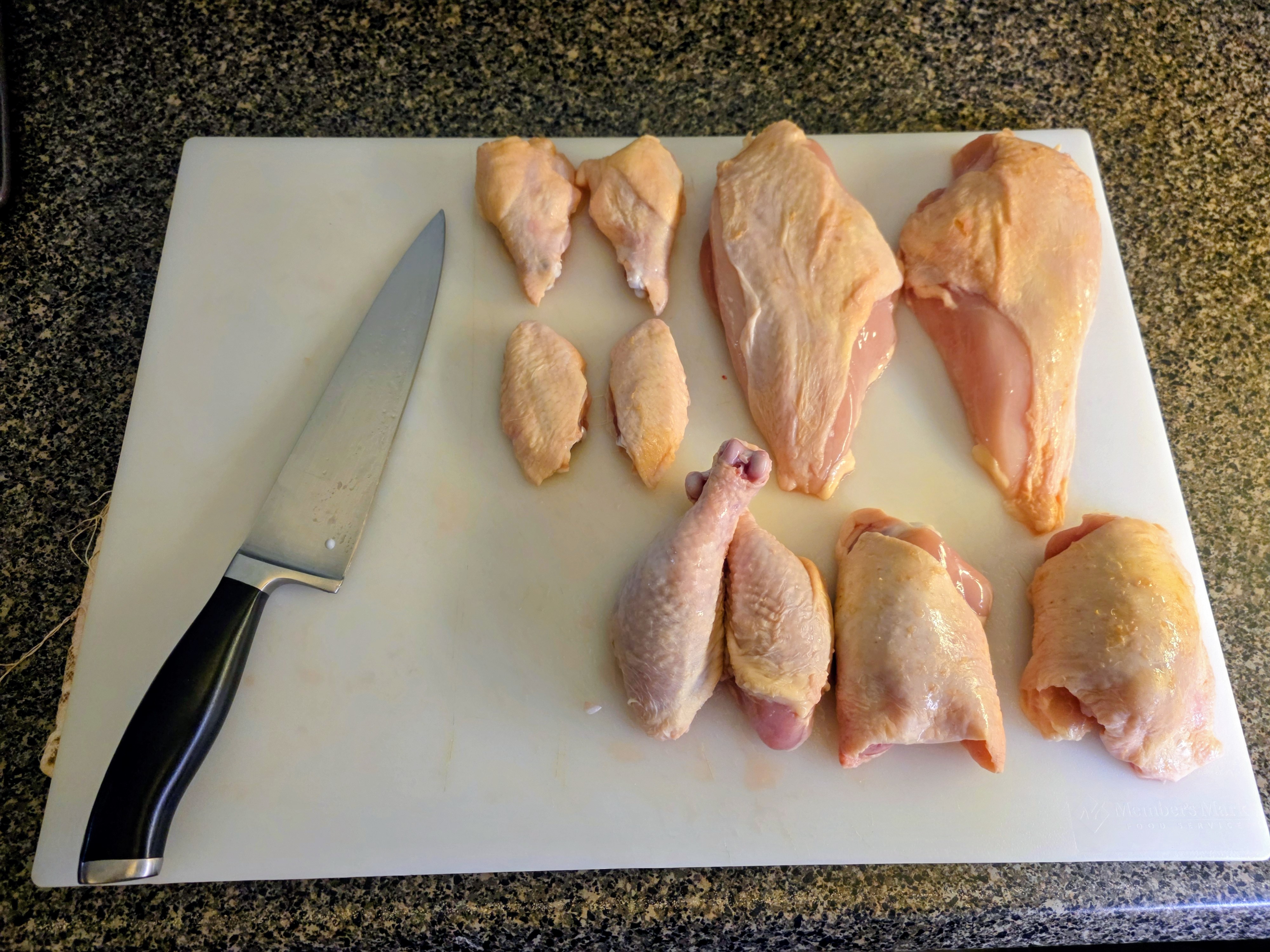
These are my preferred cuts for this application: skin on everything, but the breasts are boneless. I also separate the wings into drums and flats, and clip the tips for stock (more on that in a minute) as it makes them easier to brown in the pan before braising, and also easier to tetris into place with all the other parts before the braise.
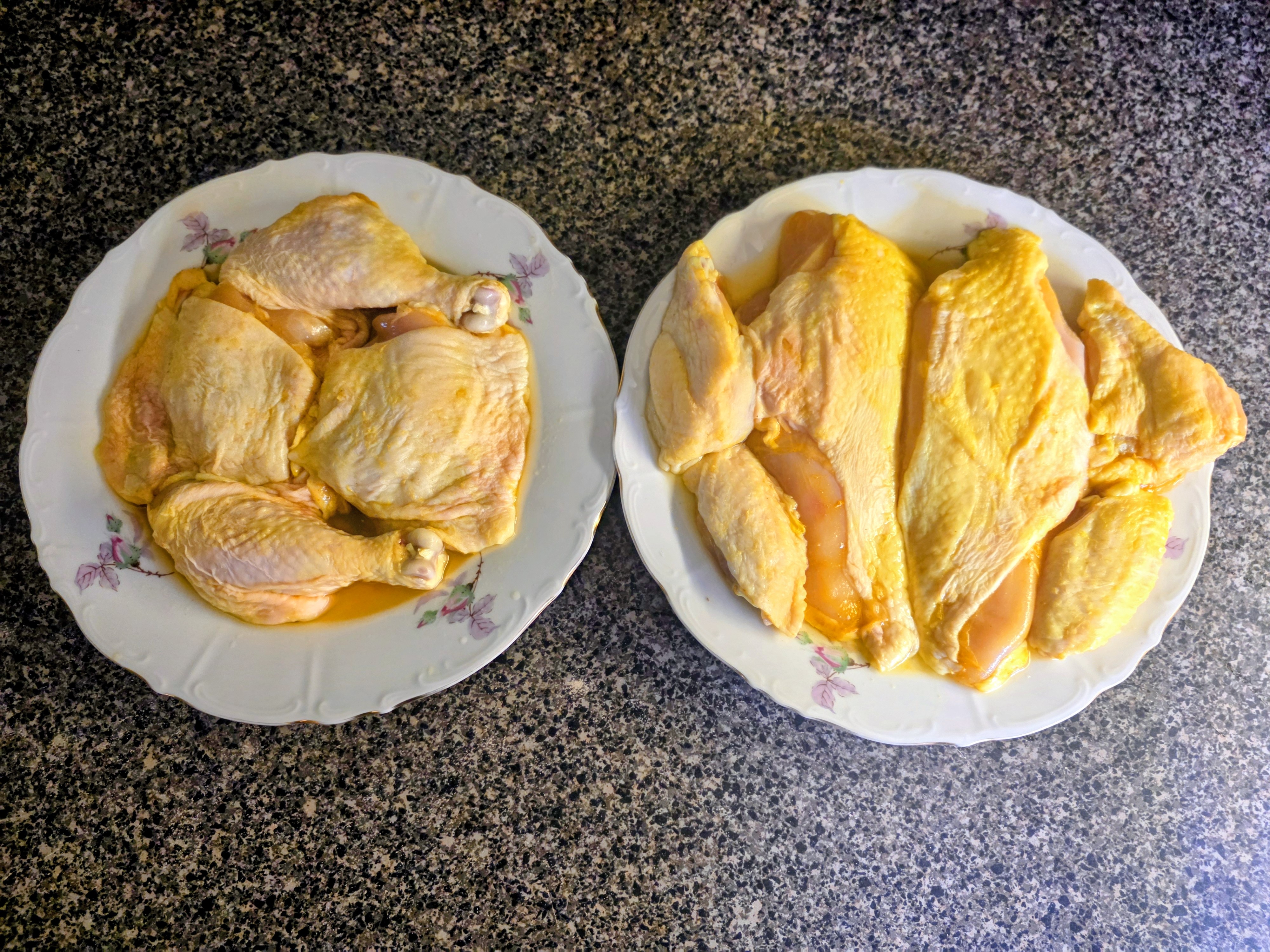
From here, we’re going into a brine. If we’re cooking the same day, use 10% salt and sugar by weight, plus our garlic powder, onion powder, and turmeric. We all know how brines work at this point, but what’s up with the turmeric? Well, it has a subtle ginger-adjacent flavor that works really well with lemon, but more than that it’s… yellow. Yeah, I know it’s a cheap trick, but really when you’re serving someone LEMON chicken, why not hit them over the head with it visually as well. Oh, and if you’re planning making this on a weeknight, go ahead and brine overnight with a 6% solution so it doesn’t get too salty.
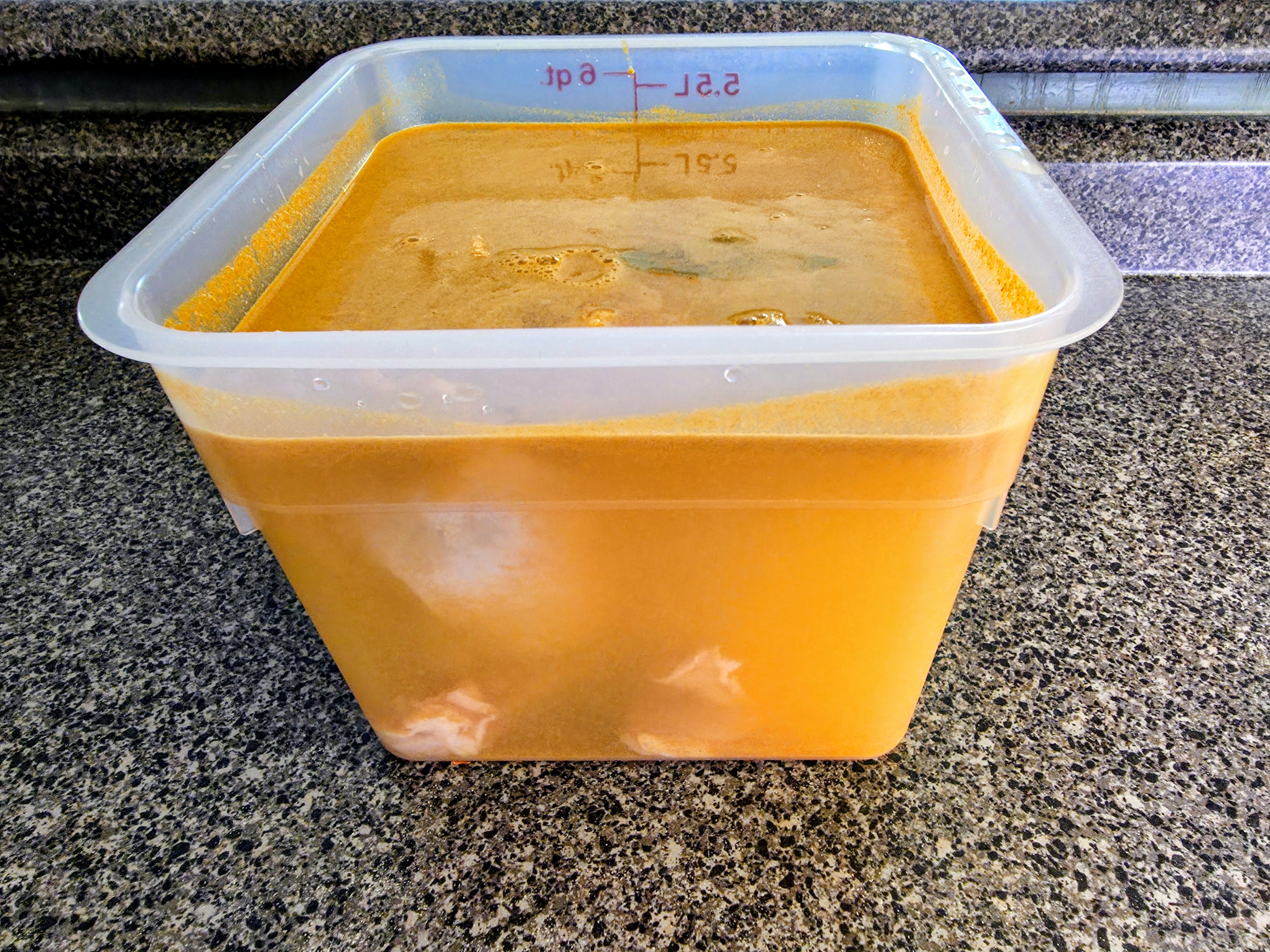
And after the soak:
Step 2: Building a Braise
Okay, this is THE most important part of the whole shebang. We’re going to be building culinary dynamite here that will flavor our chicken, be flavored by our chicken, and ultimately become our final sauce, so take care with this.
First, select your braising vessel. It can be any pot with a lid big enough to fit all of the chicken at once, so something a like an enameled dutch oven is a great choice. Get that on medium heat with our vegetable oil while you pat the chicken dry.
Once the oil is heated, brown the chicken on both sides in batches, taking care not to overcrowd the pan. The goal here isn’t to crisp the skin or even cook the chicken (we’ll get to that), but rather to build flavor in the pan itself:
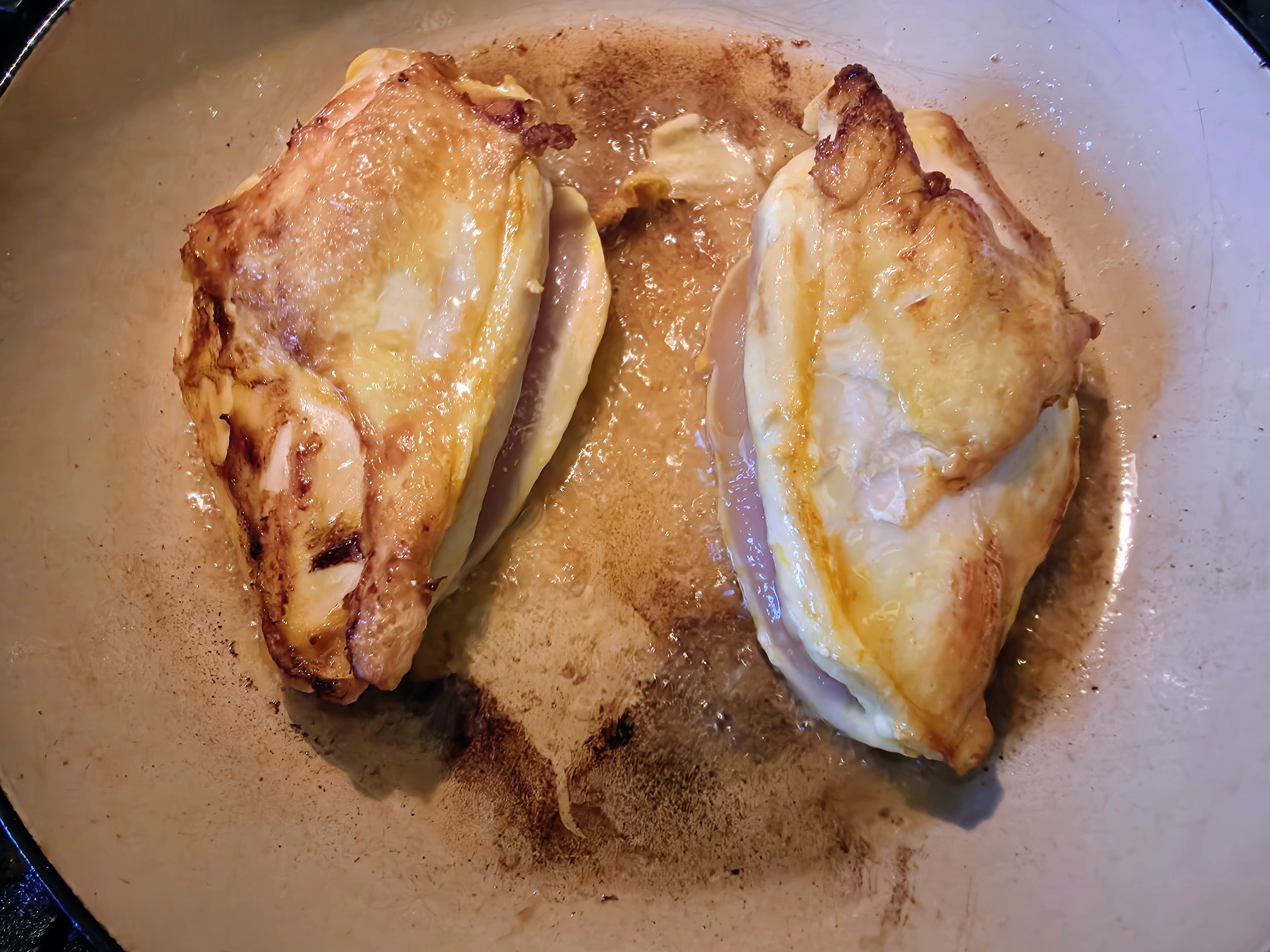
All the toasty brown bits in the bottom are going to give us deep umami in the final product, so go slow and be careful to not scorch them into bitter charcoal.
Once all of the chicken has had its turn in the pan, drop the heat to low and add your shallots and garlic:
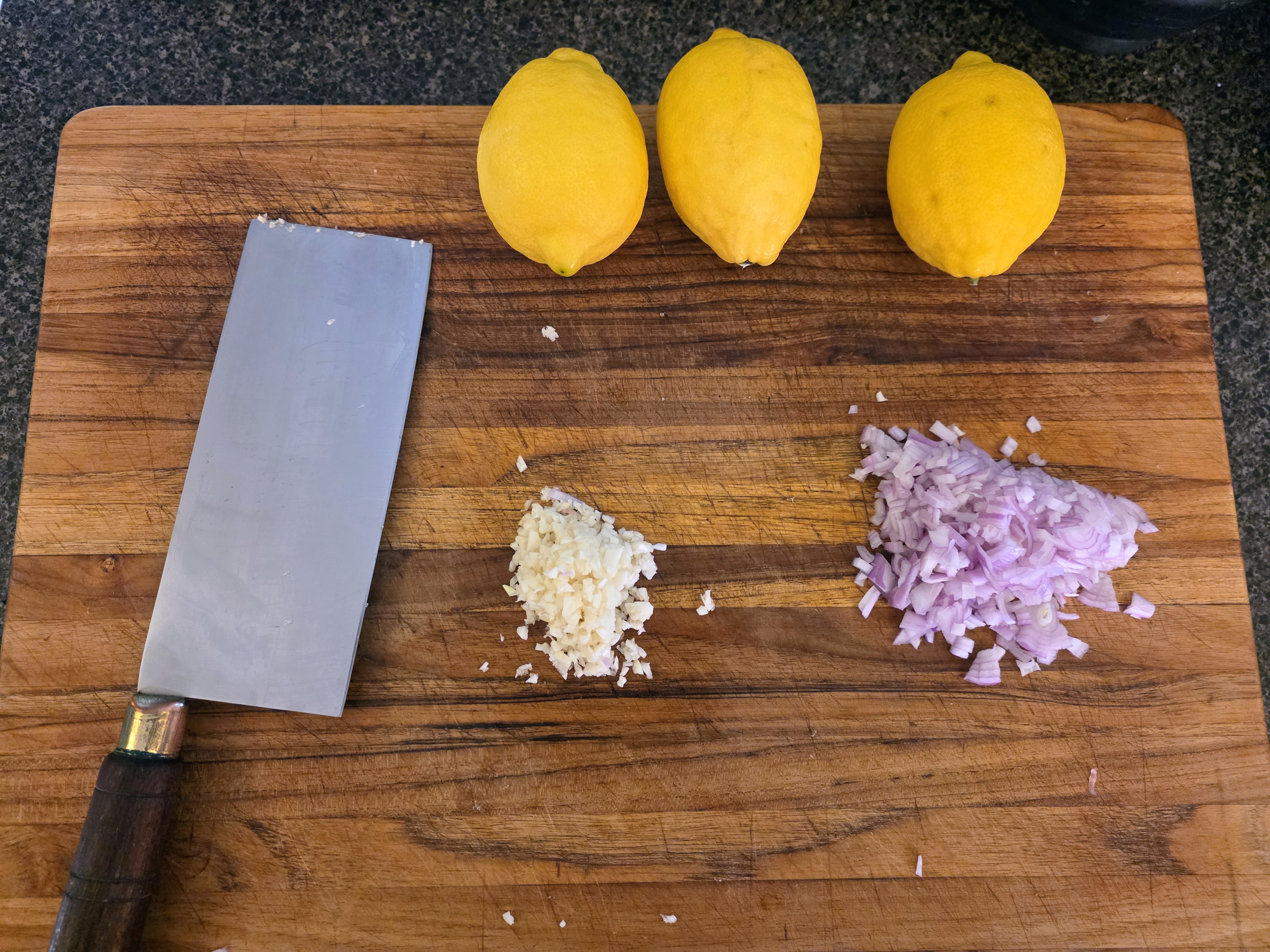
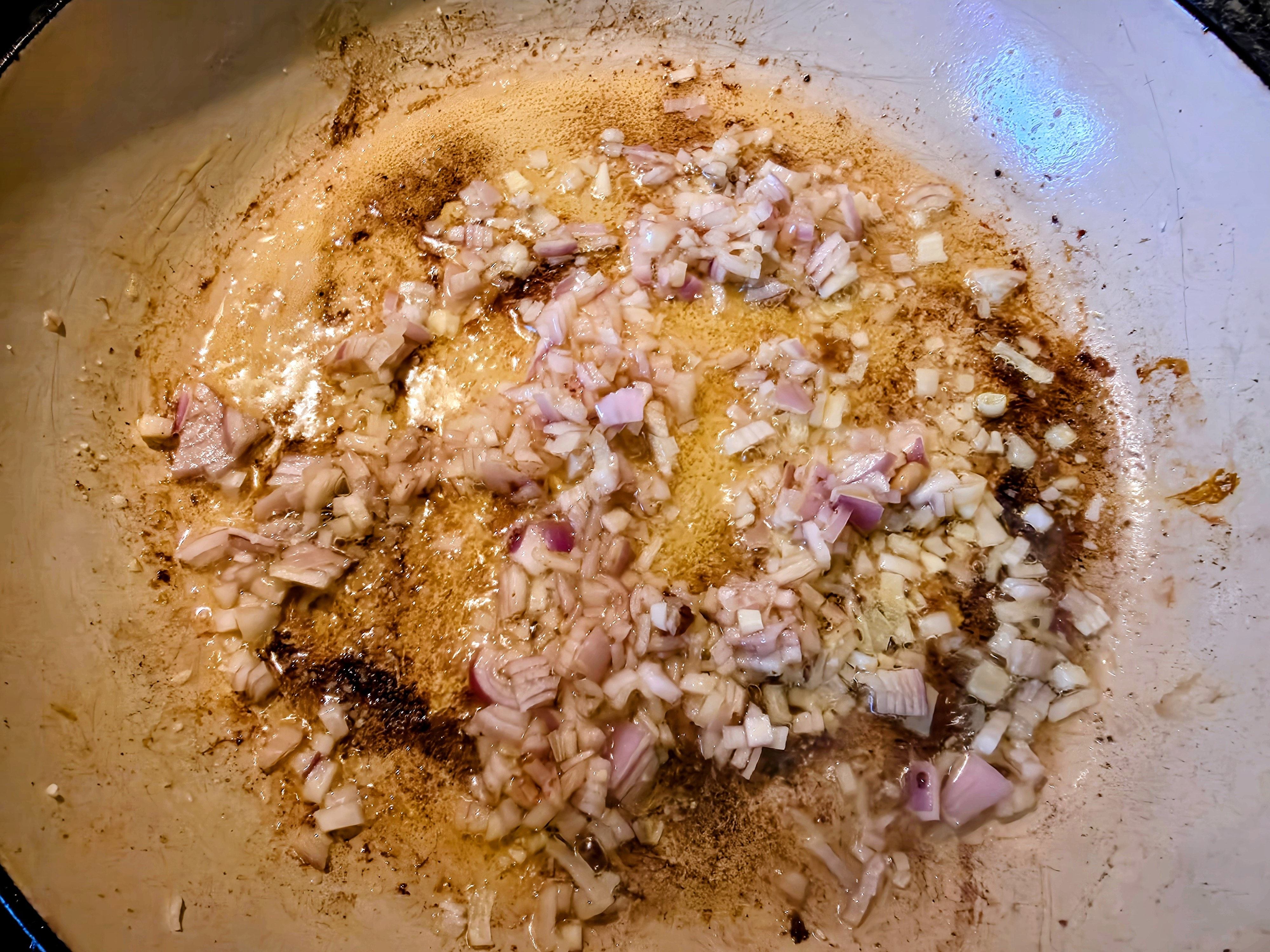
As the liquid released from your aromatics, some of the fond (the brown bits) will unstick from the pan and join the party. Don’t worry if it doesn’t all come off, it will shortly, but feel free to encourage the process with your wooden spoon as you sweat the veggies.
Once they’ve softened, go ahead and add your tomato paste and stir until it’s incorporated:
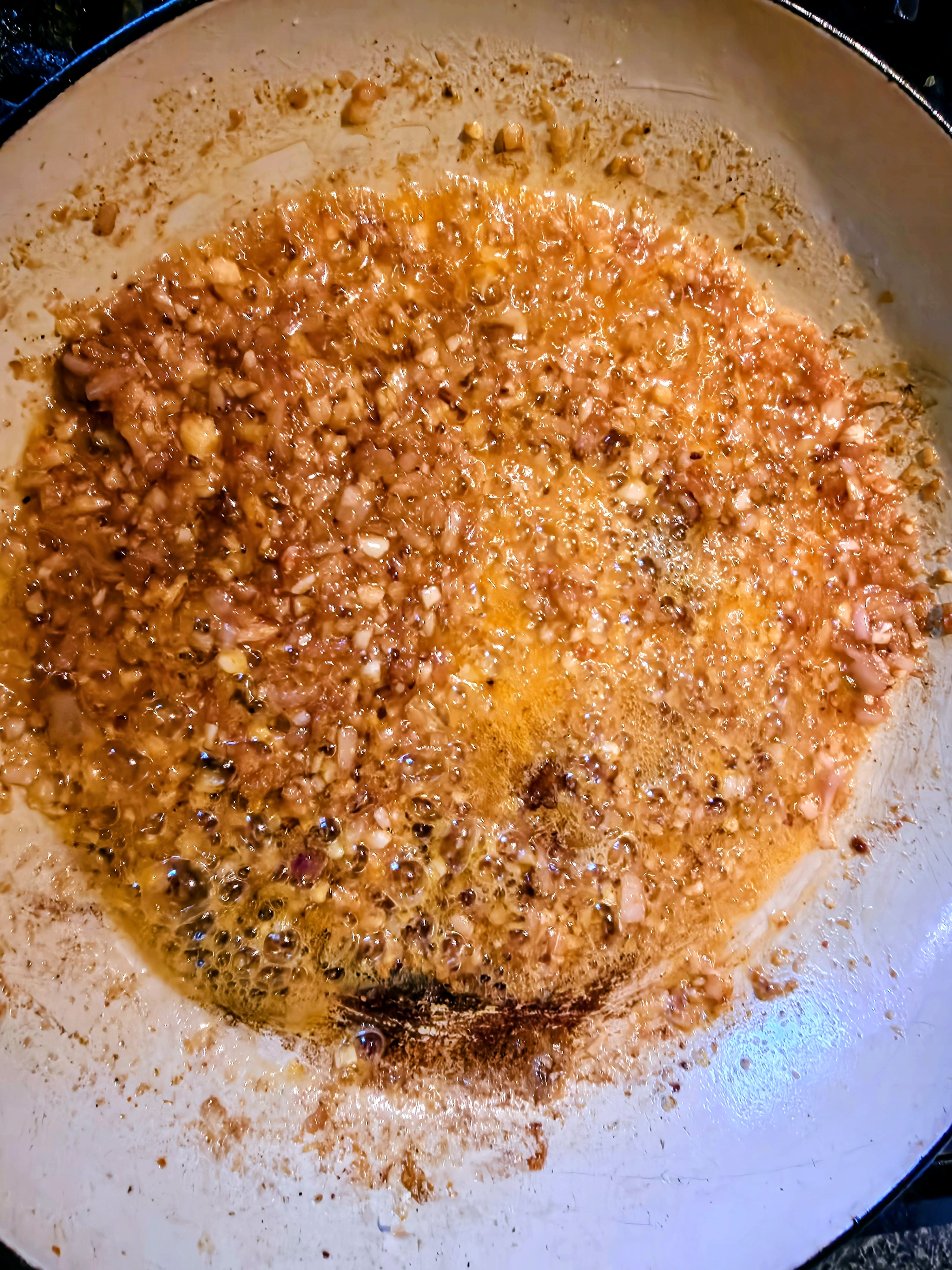
So, at this point you might be wondering just WHERE THE HELL IS THE LEMON, so it’s probably a good time to have a quick chat about citrus.
When you’re trying to make something taste intensely of lemon or lime or grapefruit or whatever, the worst way to achieve that goal is by adding more citrus. It’s a topic we’ve covered on everything from salad dressing to granola to guacamole, and it’s the biggest failing of my dad’s original recipe. He would use – and I’m not exaggerating – like ten to fifteen lemons in this thing, and the end result tasted kind of like lemon. The reasons are long and boring, but suffice it to say it’s much better to let your citrus incite the angry mob of other ingredients to back it up; it takes a little timing and technique, but it’s how we’re going to use just three (3) lemons like hand grenades.
With that said, once your tomato paste is incorporated and slightly caramelized, add the zest of two (2) of the lemons only. The aromatic compounds in the zest will infuse the oil in the pan, and as soon as it hits the heat, your whole house will smell like a citrus grove.
Allow the zest to steep for a few minutes, then add your chicken stock. Oh, right, the stock.
Look, I prefer homemade stock and, if I’m making this on a lazy Saturday, I’ll use the bones from this same chicken to get the job done; just simmer in a pot all day while you do other things around the house. If I’m making this during the week, I’ll use a portion from my freezer and hang on to the bones to make another batch of stock when I have time. You can absolutely use store-bought, but I’d heavily encourage the lowest sodium option if you’re going that route. Also, speaking of sodium, you might notice we haven’t touched the salt shaker yet. Well, that’s because all of our salt is already in our chicken from the brine. Neat, huh? Anyway, into the pan with the stock and stir to combine along with the juice of the two (2) lemons we just zested:
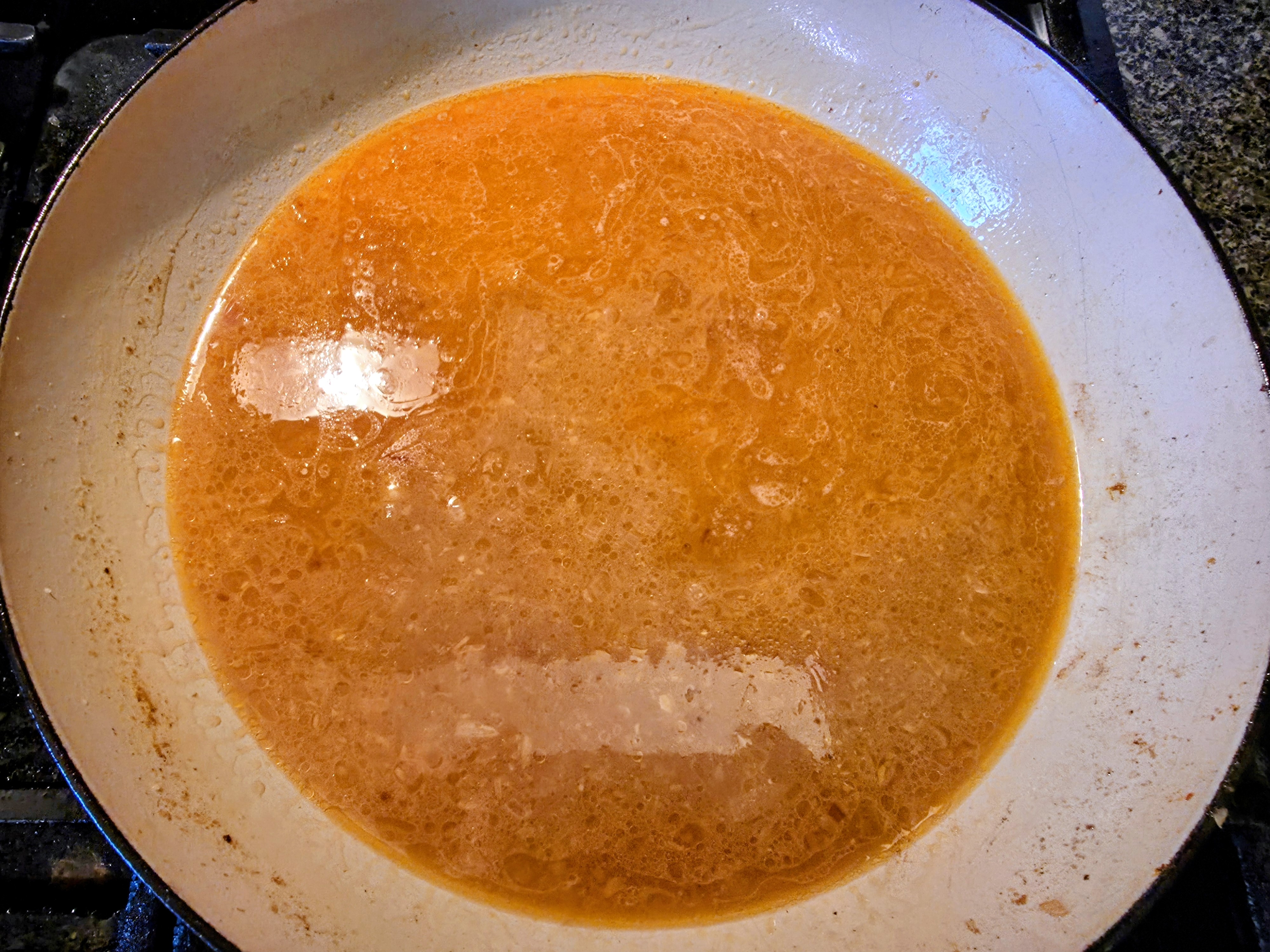
This doesn’t look like a lot of liquid, and it isn’t. We’re braising here, not boiling, and there’s plenty of moisture in the chicken waiting to come out and play. Speaking of, get your chicken into the pool:
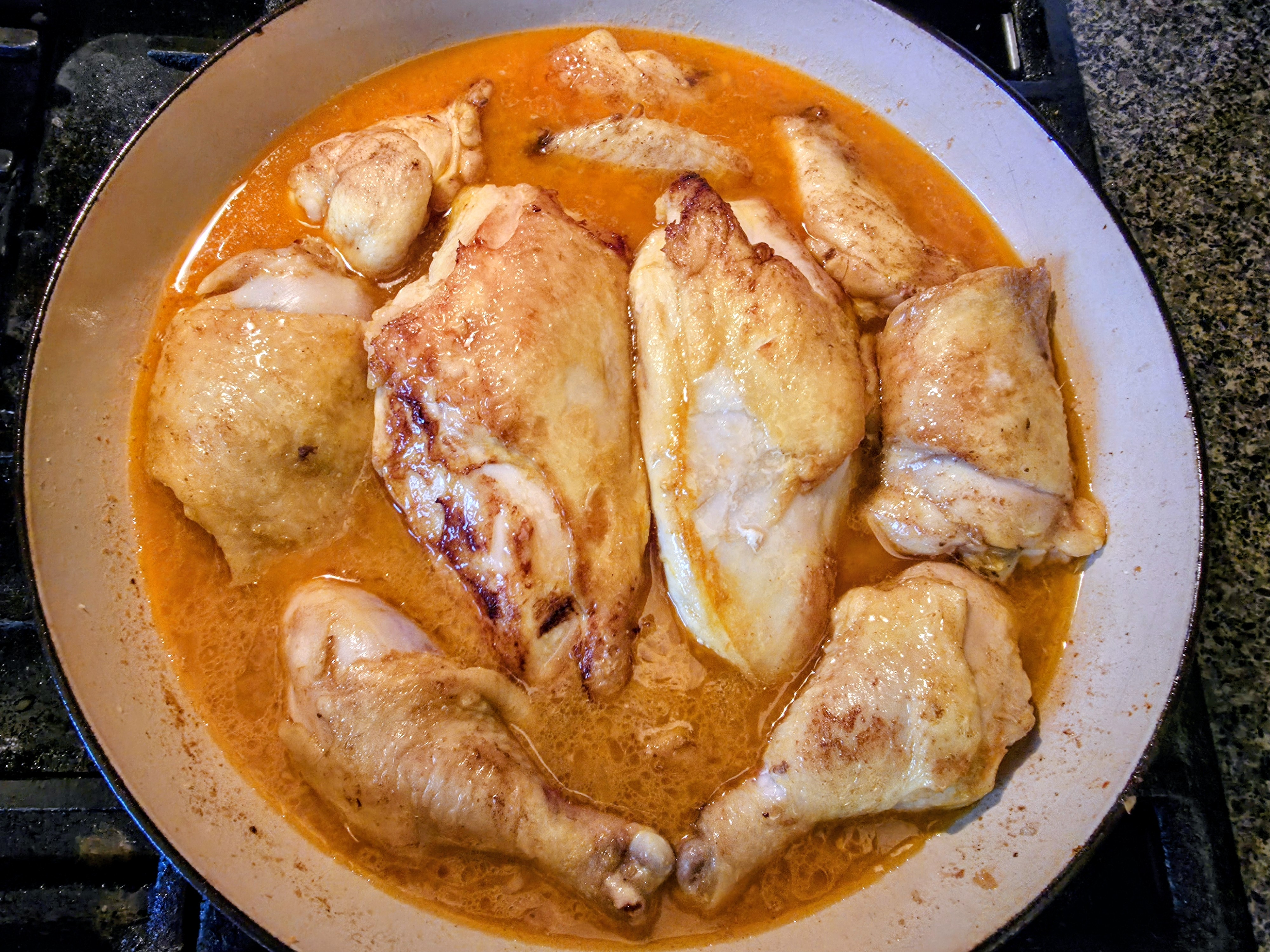
From here, cover and braise in your oven at 350F for half an hour. After that, remove the lid and crank it to 450F for another thirty (30) minutes:
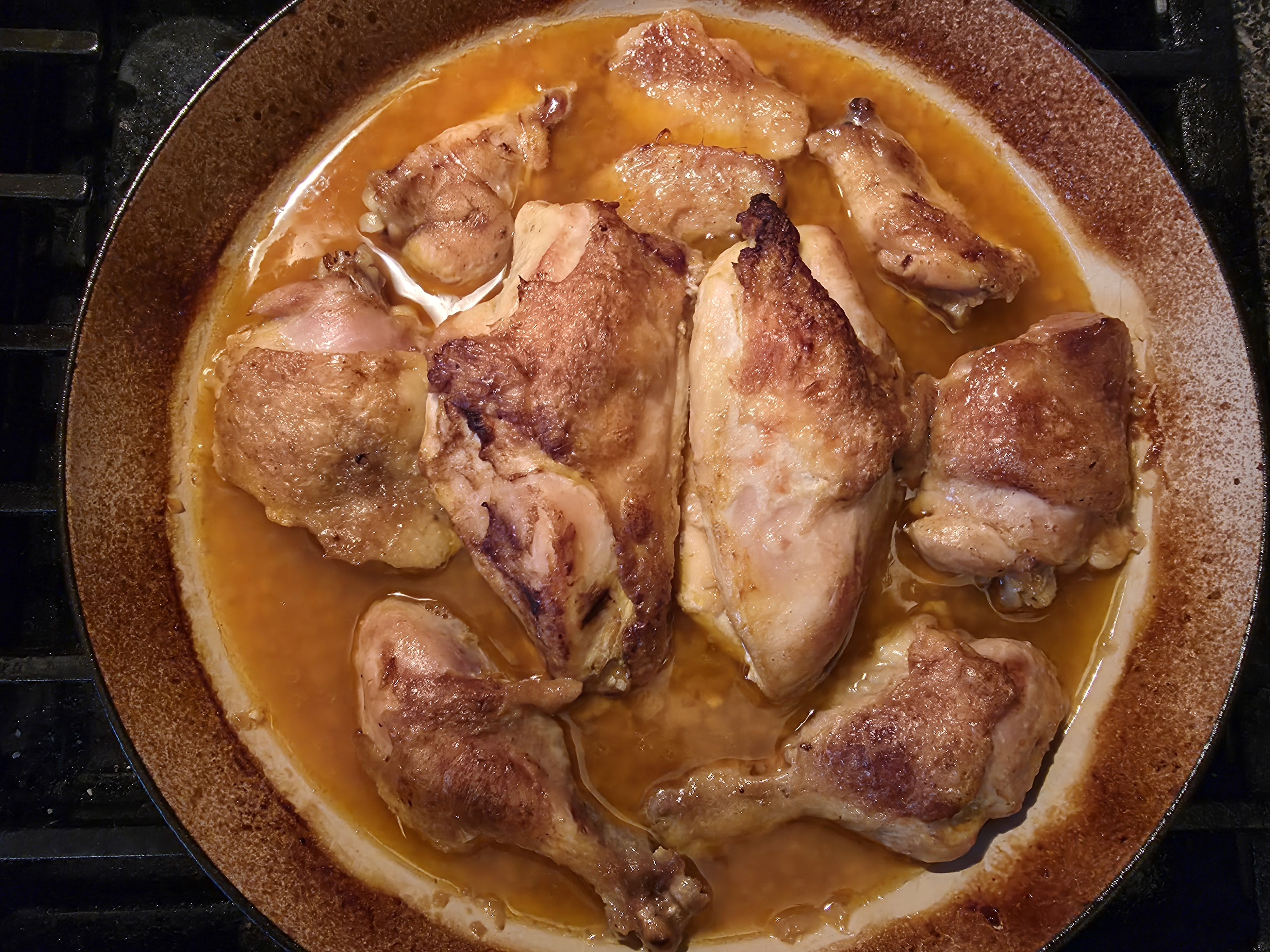
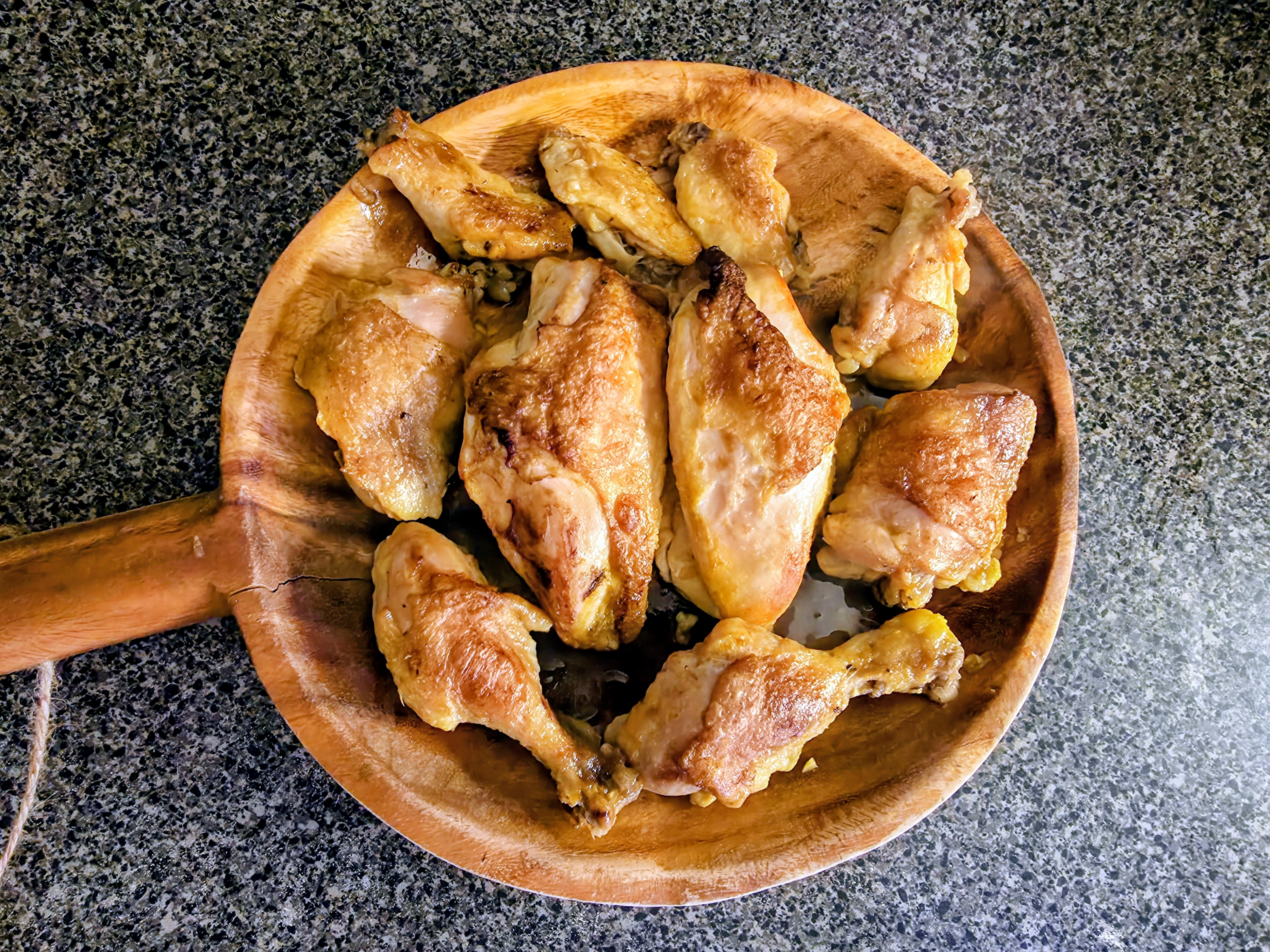
The result is hyper-tender, lip-smacking chicken which has converted all of the collagen to gelatin, while keeping the skin crispy. Carefully remove the chicken (it’s so tender!) to your serving dish of choice while we contemplate the final step.
Step 3: The Sauce
Remember when I said the braise was culinary dynamite? Well, now we’re building the detonator. With your pan over low heat, add the Dijon and stir until it’s incorporated:
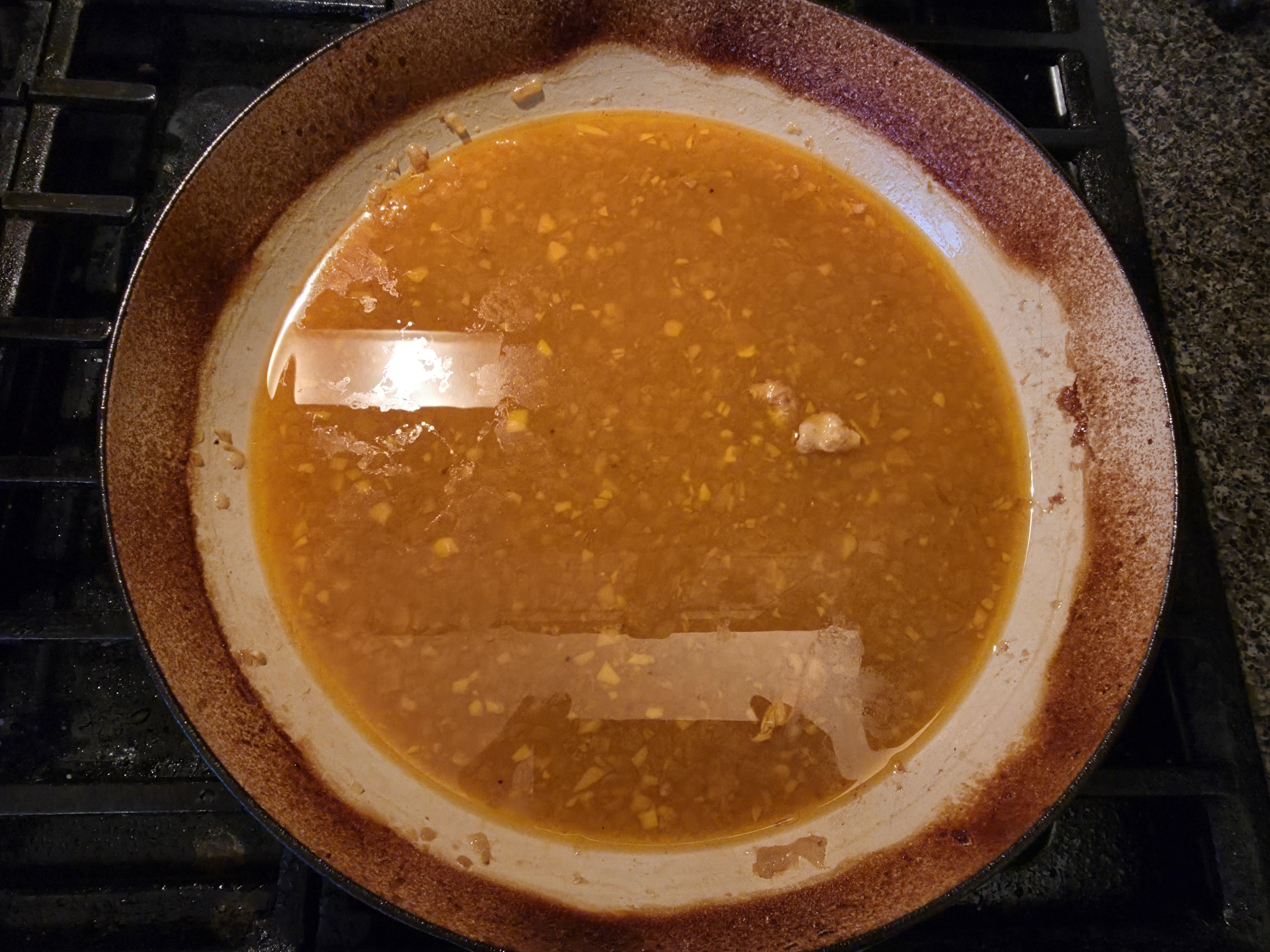
Now, and ONLY NOW, add the zest from your final lemon, then the juice, taste for salt, gasp in amazed ecstasy, and remove to a serving bowl:
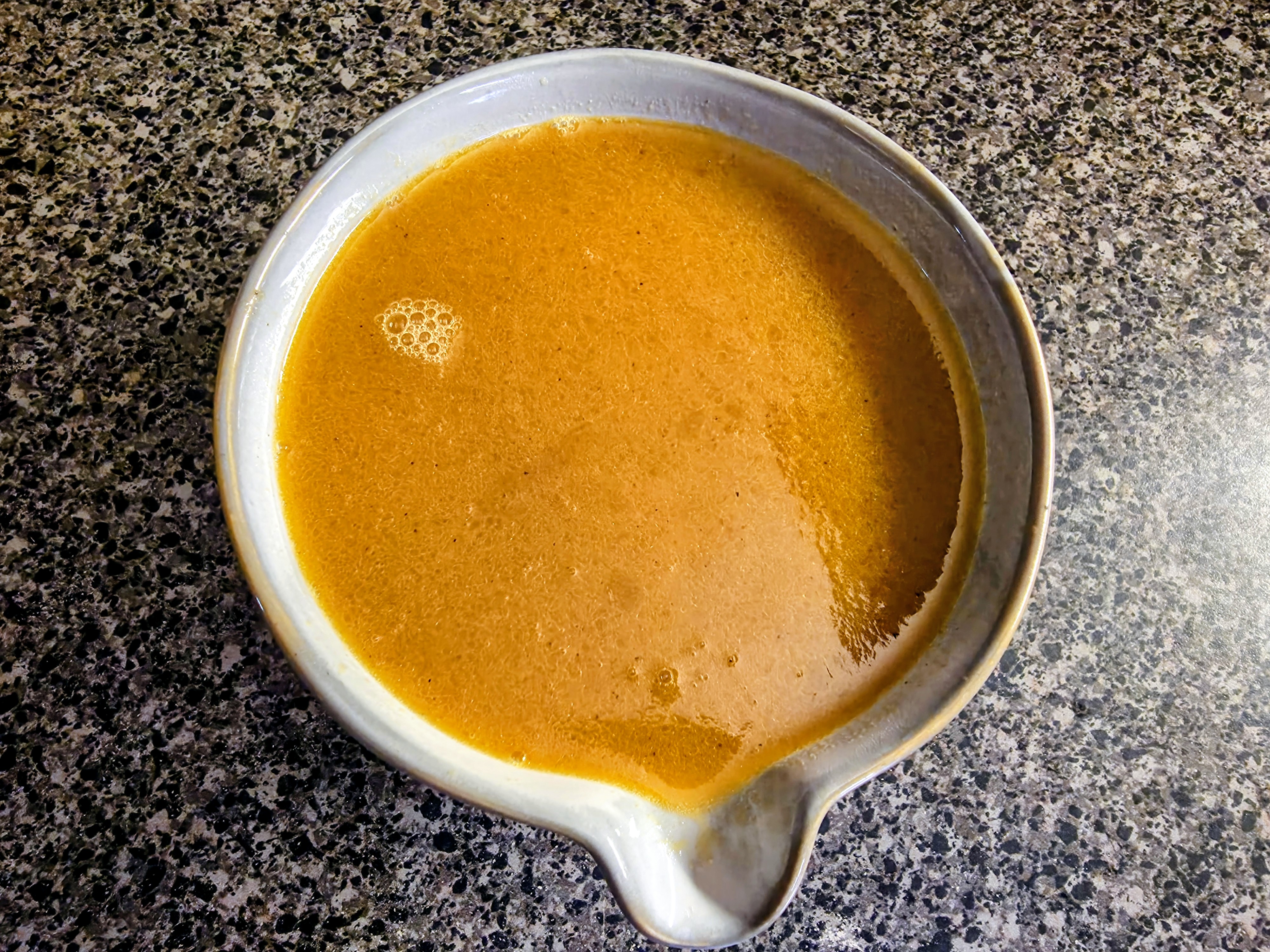
So, what’s up with the lemon in two different places here? Well, citrus does this weird thing where it’s almost like it goes dormant in a dish if it’s been cooked for too long, which is why my old man’s barrage of juice resulted in disappointment. However, treated the right way, all of that flavor and punch can be resurrected to full strength. In other words, if you taste this sauce before and after deploying the final lemon, it will taste like you added WAY more than one. It’s like magic.
So now we have a platter of mouth-watering chicken, a bowl of eye-popping sauce. What to do with them? Personally, I like the whole thing over rice, but a side of pasta is also a great option. Hell, some oven-roasted potatoes would be fantastic as well, or just eat a leg over the kitchen garbage can while your eyes glaze over. Really, all great options.

 10 Chickens to Maine