#RecipeUpTop (details below):
- Pork Loin or Pork Shoulder (NOT tenderloin);
- 2 carrots;
- 2 serrano chilis;
- 1 apple;
- 1 hand fresh ginger;
- 1 red onion;
- 1/2 head green cabbage;
- 1 cup white vinegar;
- 1/4 cup sugar;
- Salt (to taste);
- Mayonnaise (to taste);
- Mild white cheese like muenster or provolone (to taste)
- French Bread Rolls (Recipe Here, or store-bought is fine)
Method for the hog:In a heavy-bottom pot, brown the pork roast on all sides. Split the apple in half, and add it to the pot along with the carrots and a hunk of peeled ginger. Cover with water BUT NO SALT, and bring to a simmer. If using a pressure cooker, cook under pressure for one (1) hour and allow to naturally release. If cooking stove-top, cook until the pork easily shreds, taking care to maintain water level in the pot. Remove the pork and shred. Add salt to taste along with some of the prepared jus to taste.
For the jus: Strain the ginger-apple pork stock to remove any large solids, and set aside. Portion out desired quantity of jus, add to a smaller pot, and bring to a simmer. Add salt, vinegar, and sugar to taste.
For the slaw: shred the cabbage, toss with kosher salt and allow to stand for one (1) hour. Heat the vinegar and the sugar until dissolved, then allow to cool. After the cabbage has rested, rinse thoroughly with cold water and drain. Add to a large mixing bowl with julienned red onion and serrano peppers, and top with the vinegar-sugar solution. Toss thoroughly and allow to stand another hour before draining and storing.
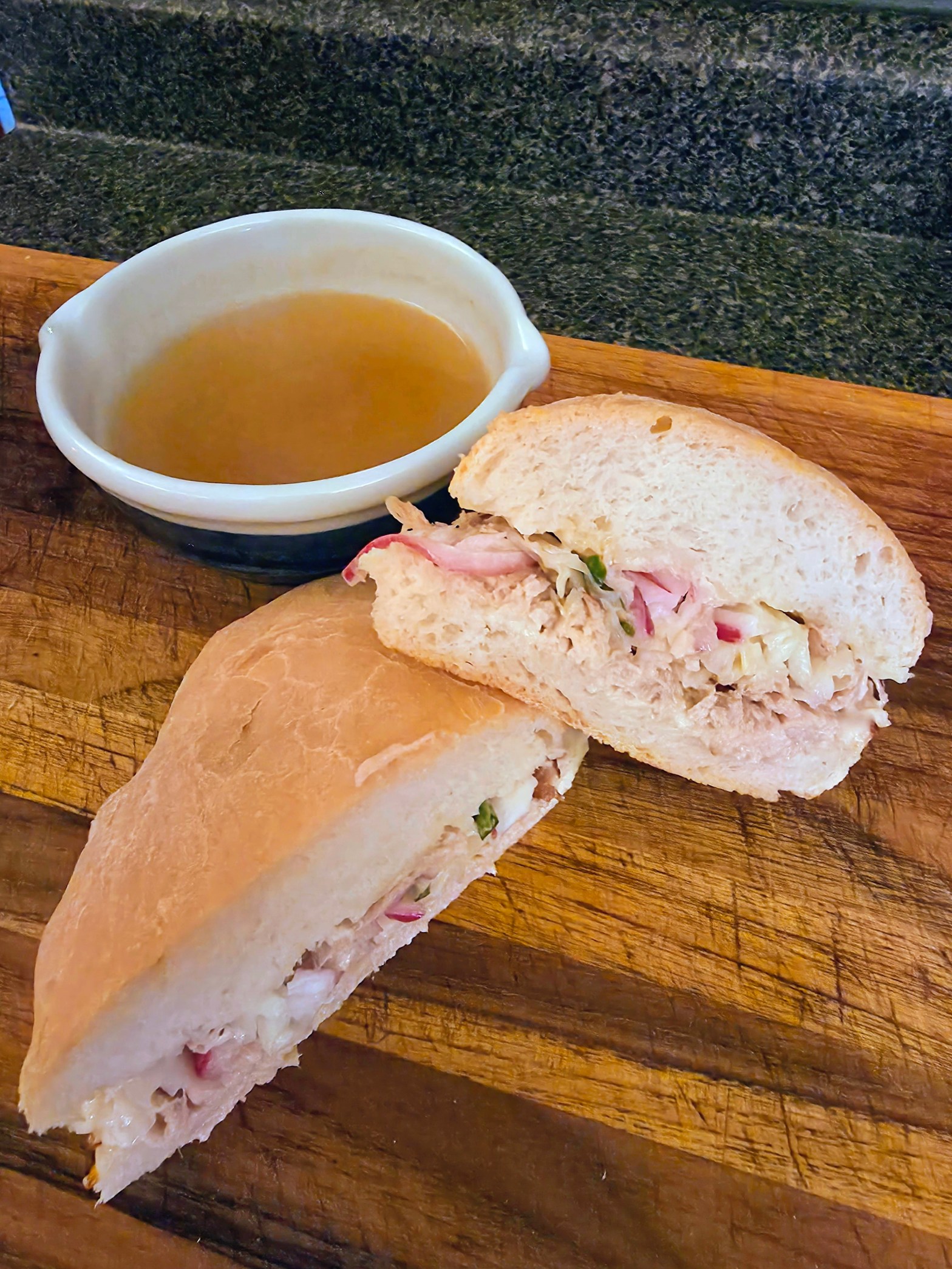
For the sandwich: Split your rolls, top with mild cheese and toast in a 500F oven until melted. Add thin layer of mayo, shredded pork, and slaw. Serve with a bowl of the prepared jus.
The Details
It’s fall here on the Mountain. The leaves are changing, there’s a crisp chill in the morning, and everything at the grocery store costs three times more than it did a few years ago. Okay, that last part isn’t really related to the time of year, but it has changed our family’s buying habits and this recipe is the result of that intersection between changing seasons and tightened purse strings. It is hearty and satisfying, with some spice-notes of fall, all on an extreme budget. So, let’s cook.
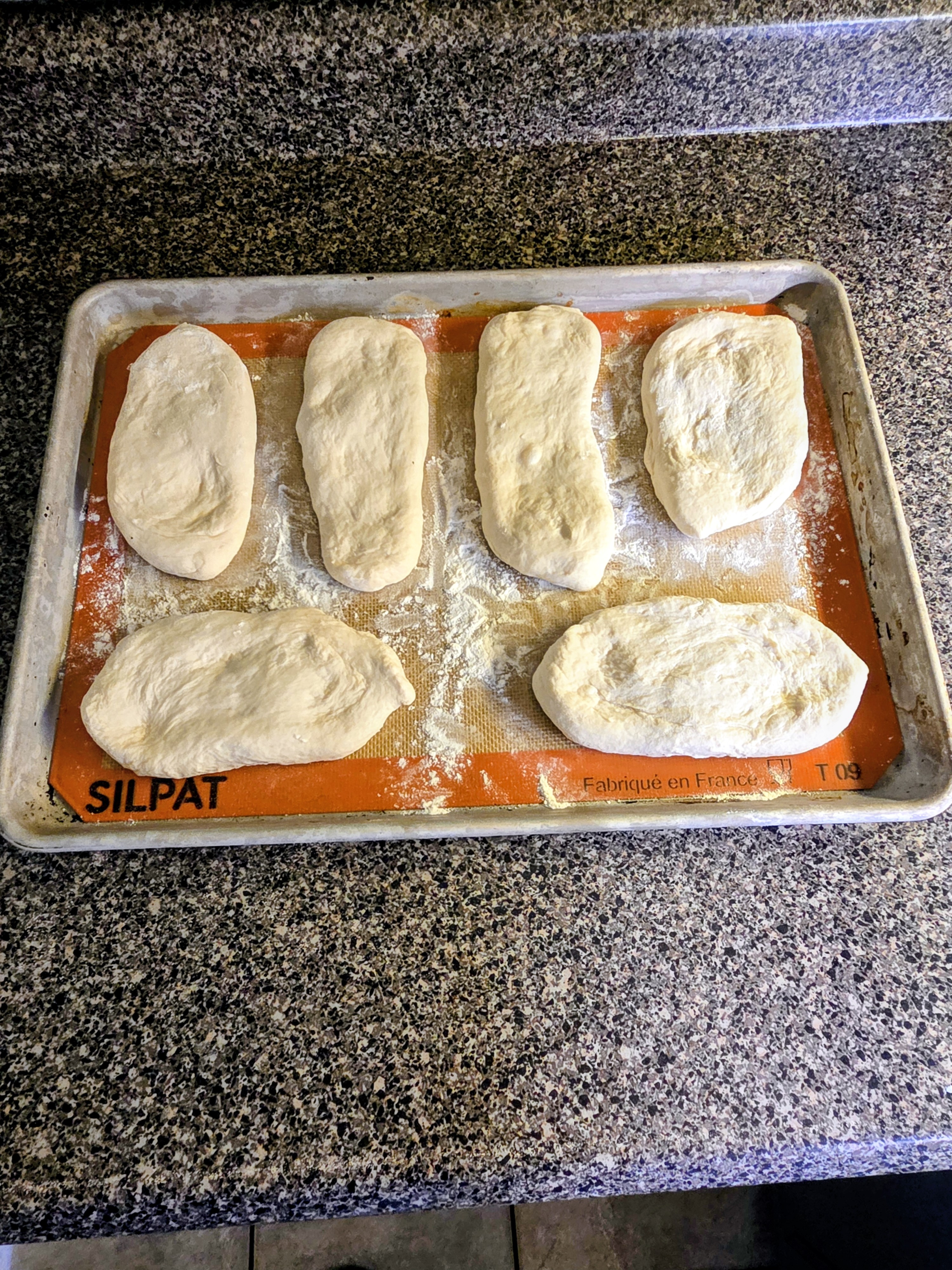
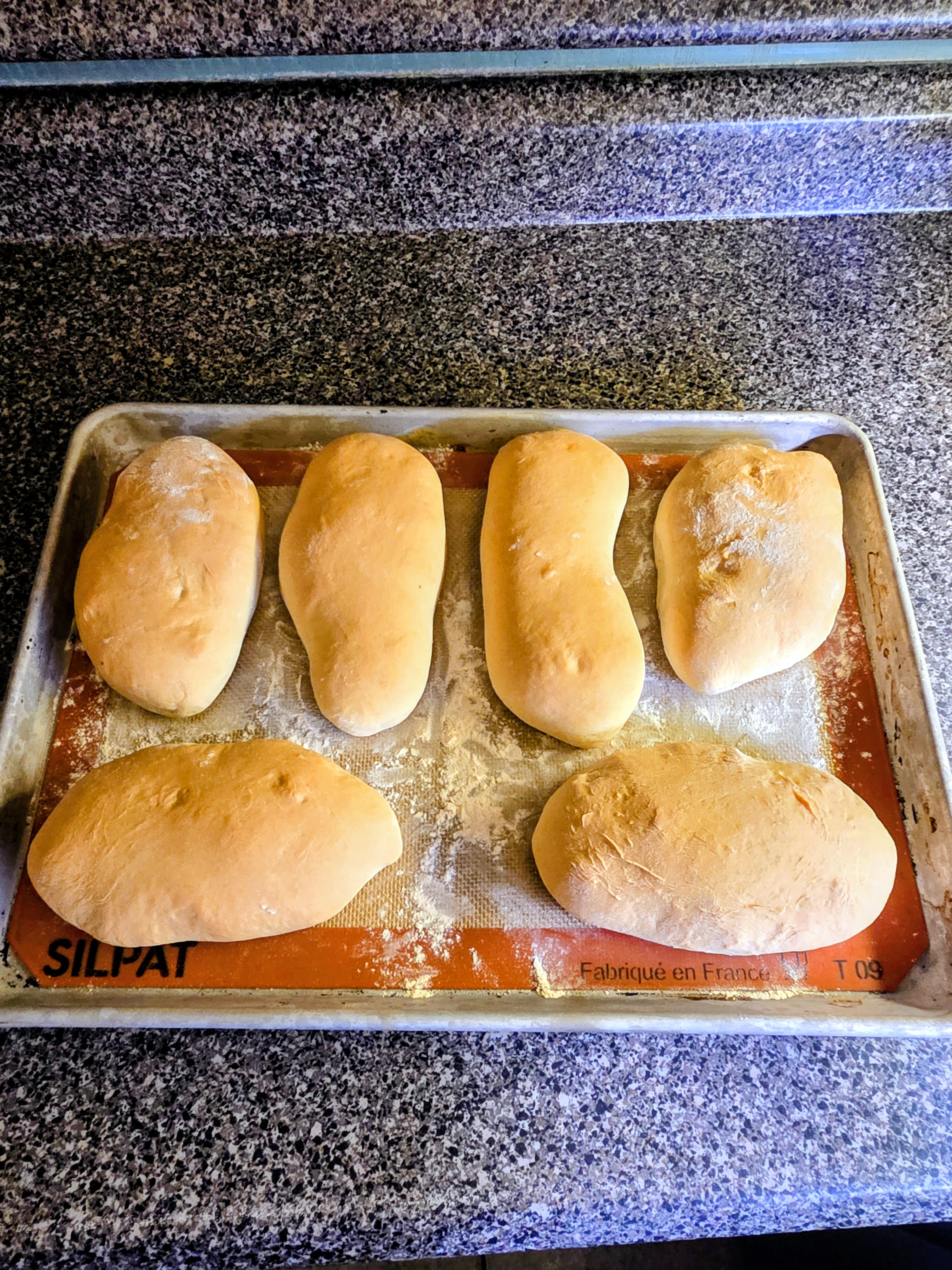
First up, the bread. We’ve covered all kinds of rolls and loaves here, but our New Orleans-style French bread really strikes a nice balance between study enough to stand up to heavy dunking, but spongey enough to soak up all of that incredible jus. You can, of course, buy rolls for this, but they won’t be as good and they’ll cost more. If you do decide to follow our recipe, just form them into ten (10) rolls instead of two (2) loaves:
Next up: the slaw. To be completely honest, this is a reverse-engineering job based off a fish shack in West Palm Beach, Florida. It took me a while to get it right, but the result is a sweet-n-sour medley with a satisfying crunch that will keep in your fridge forever. Not only is it great on this sandwich, it’s REALLY fantastic on crunchy fish tacos or with fried chicken, so don’t be afraid to make a big batch and keep it on hand.
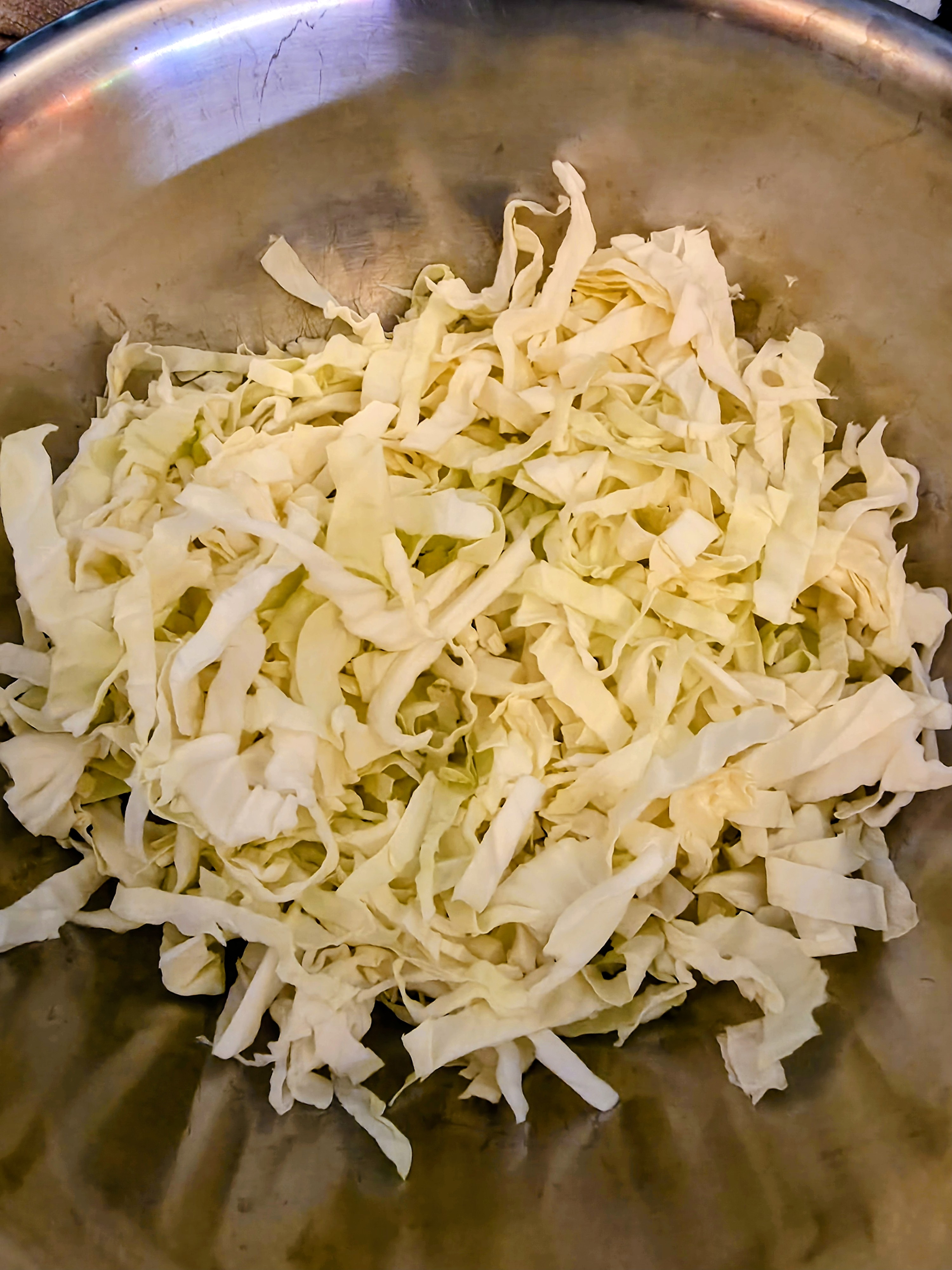
We’re starting this by quick-curing the cabbage. This is going to draw some of the liquid out while also drawing some of the salt in, which will both help with the final texture as well as shelf life. It’s a simple process of shredding the cabbage, tossing with a hearty handful of salt, and letting it sit for an hour:
While that’s resting, we’ll assemble our “dressing,” which in this case is more of a pickle, and it’s simple. Dissolve the sugar in the vinegar and let it cool to room temp. That’s it. If you want to get wild, you can add a few drops of fish sauce, but really that’s all there is to it. The salt from the cabbage will provide all the salinity we need, and the sugar-vinegar solution will give us a great sweet-n-sour punch that plays well with the richness of other foods. After an hour, you can see the cabbage has somewhat deflated:
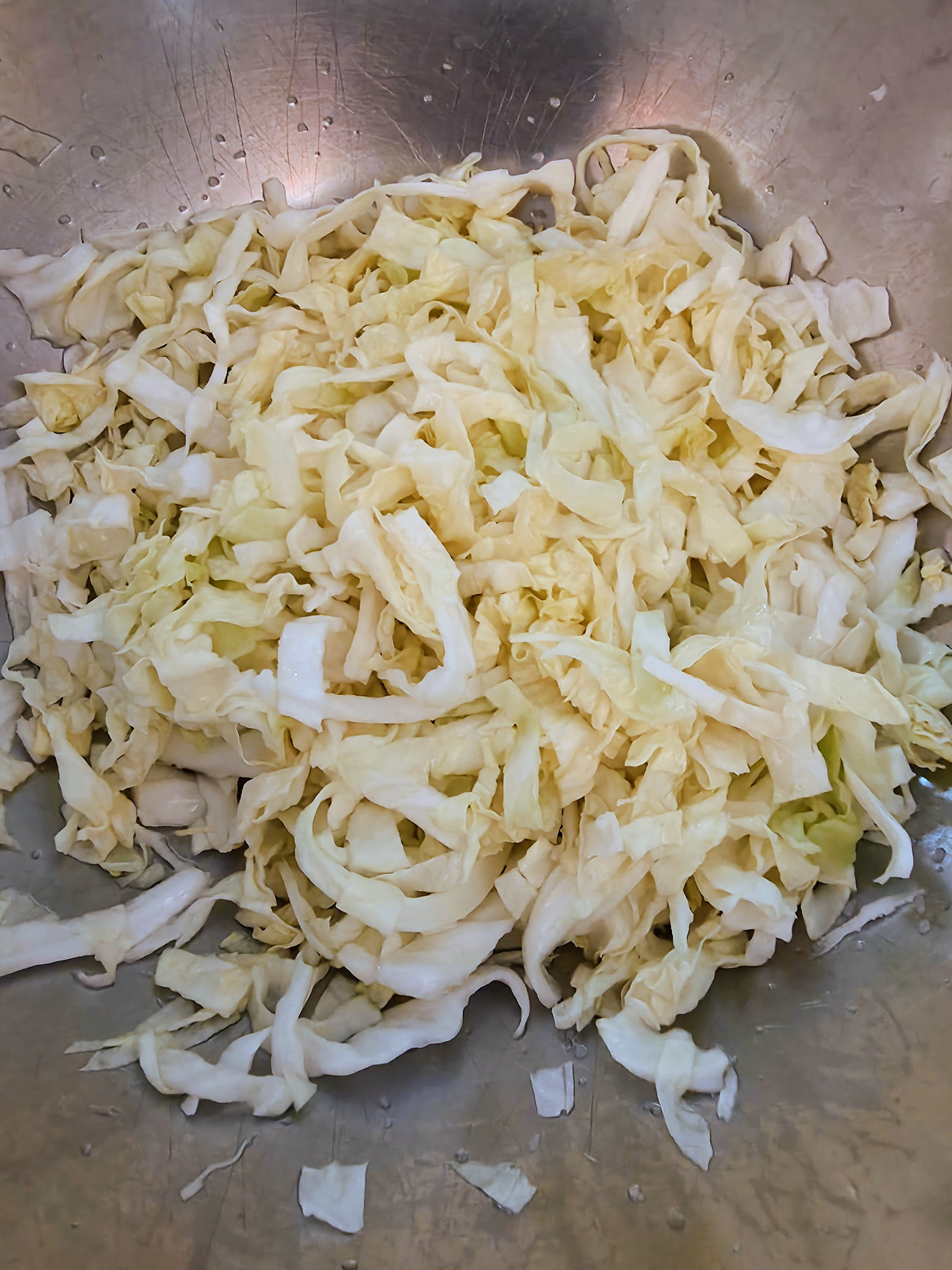
Give it a couple of good rinses in cold, fresh water to remove excess salt, then drain thoroughly.
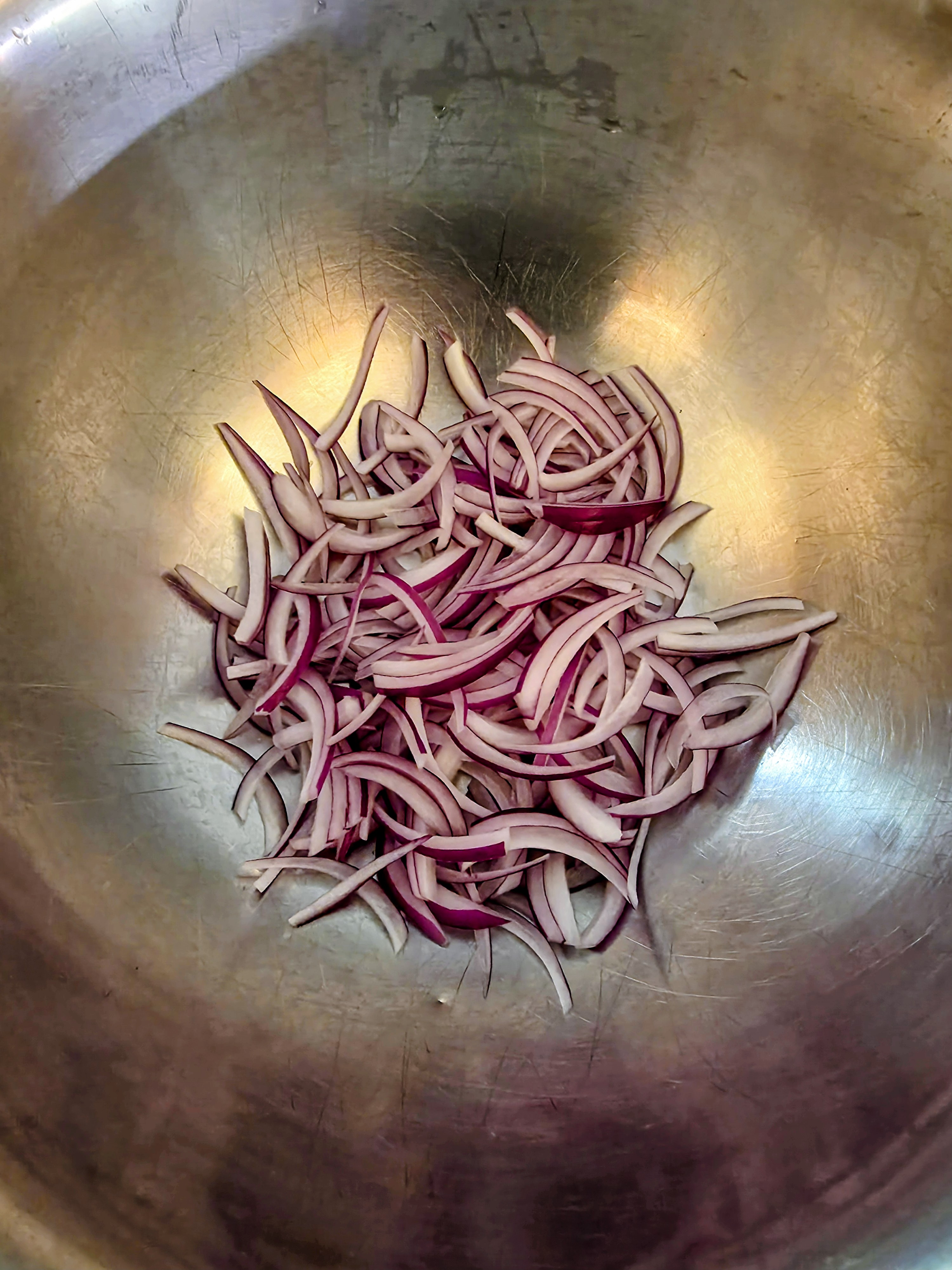
From here, it’s just a matter of adding our serrano pepper, our red onion, and tossing it all together:
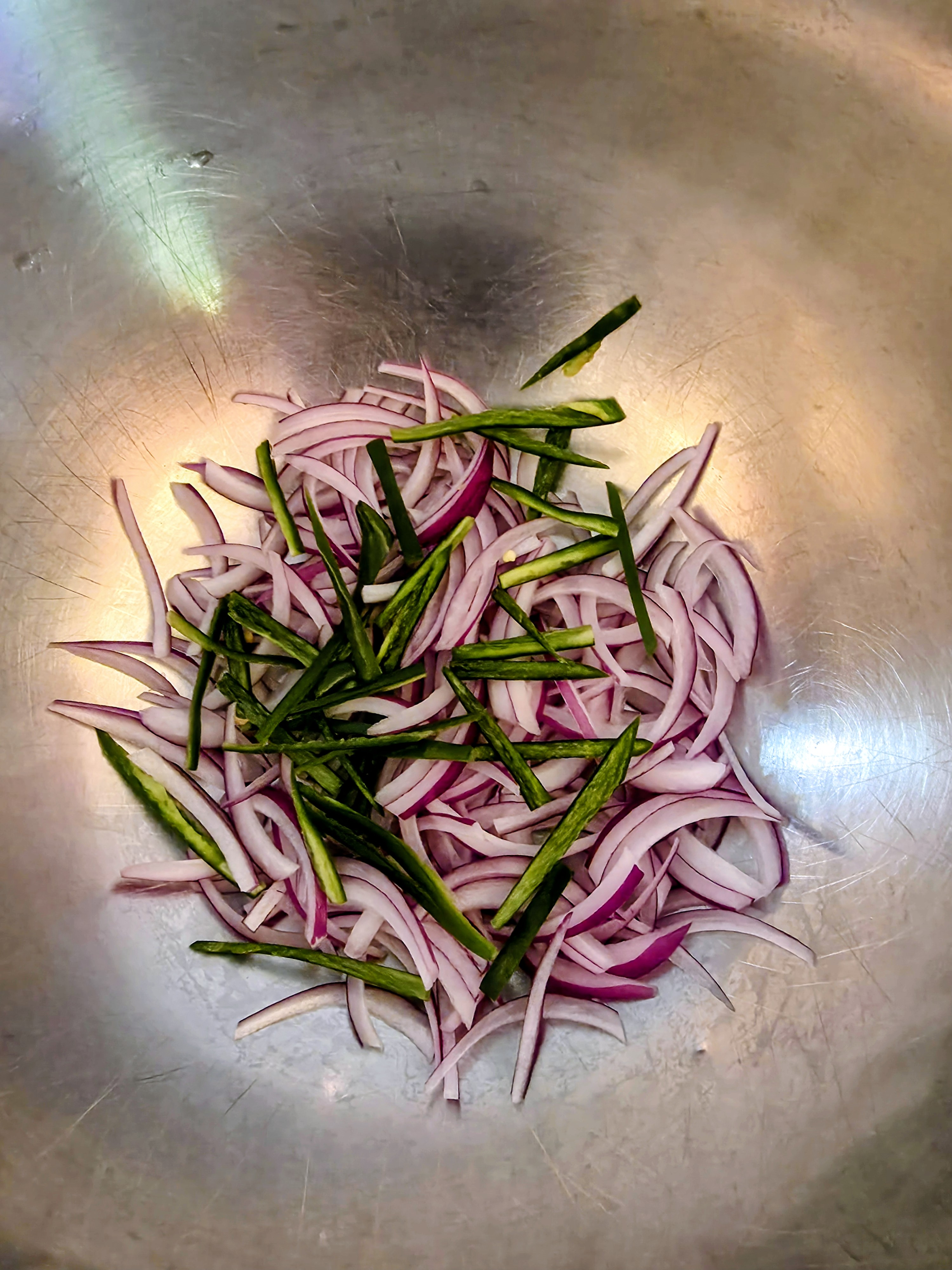
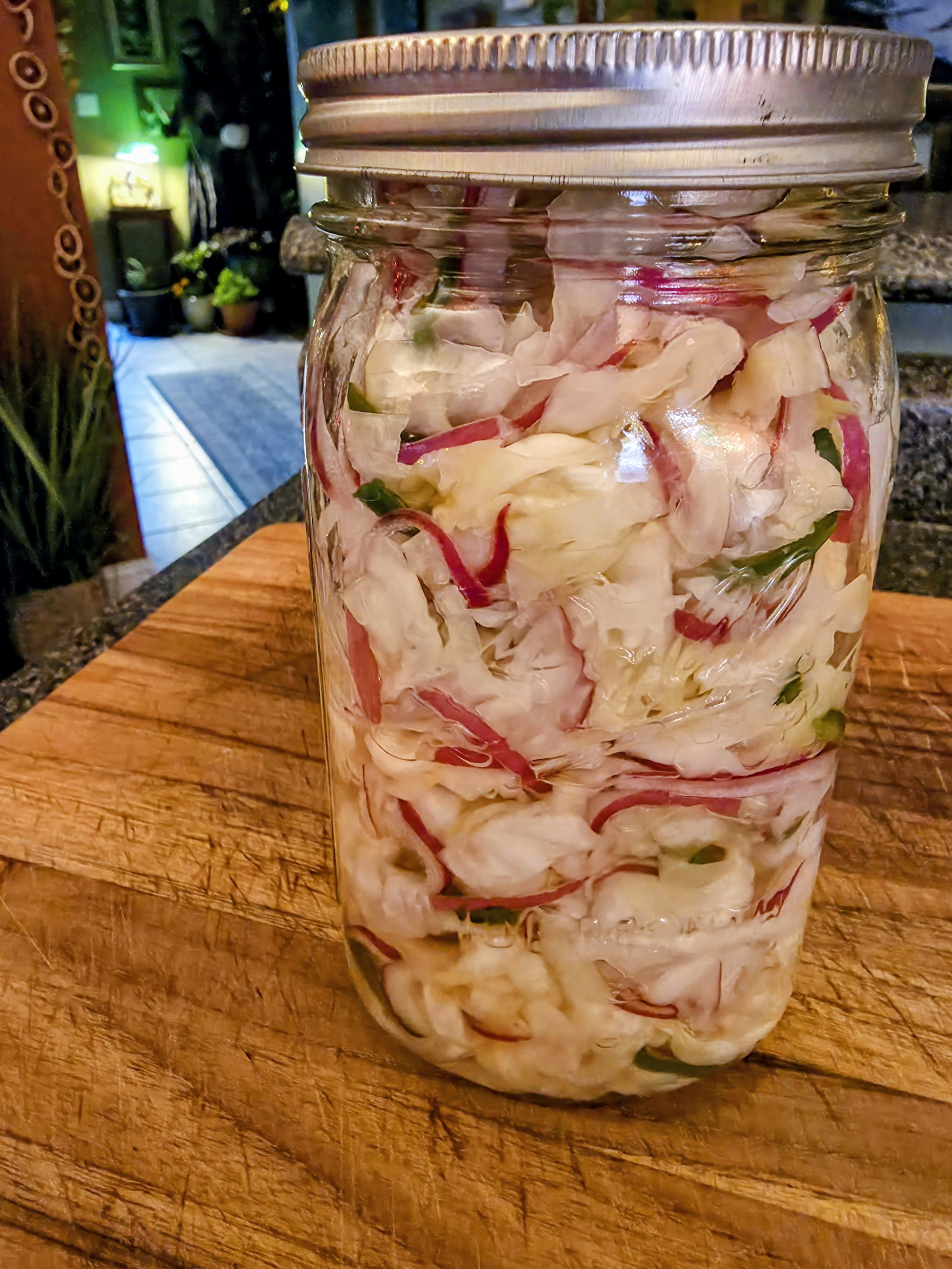
Let this sit for another hour, tossing every fifteen (15) minutes or so, then drain and remove to your preferred storage (I like mason jars for this):
Onto the pork and jus. Before we get to the nitty-gritty (which really is just browning and simmering), let’s take a quick minute to talk about the cuts we’re looking for. While beef prices seem to be overtaking precious metals, pork loin remains steady (so far) at around $2.00/lb at our local price club. Loin (again, NOT tenderloin) is a GREAT protien to keep on hand in your freezer as it’s boneless and low-fat which means it’s both easy to manipulate into roasts, chops, strips, shaved thin, etc, but it’s also extremely high yield. There is basically zero waste on these things. Typically, we’ll buy several whole loins and break them down into smaller roasts for the freezer. From there, we can thaw and butcher them further if need be, or just cook whole like we’re doing today.
As to pork shoulder, I have occasionally seen them on sale for as low as $0.99/lb, which is a steal. It will work just fine in this recipe provided you trim any extra fat cap, but that said, I find the real value in a shoulder to be either for smoking into pulled pork, or grinding to be used for meatballs, sausage, taco meat, Asian dumplings, chili etc. Really, this recipe is designed to do something fun with the loin, but, well, use what’s cheap.
Speaking of, we start simply enough by browning the roast on all sides in a heavy-bottom pot:
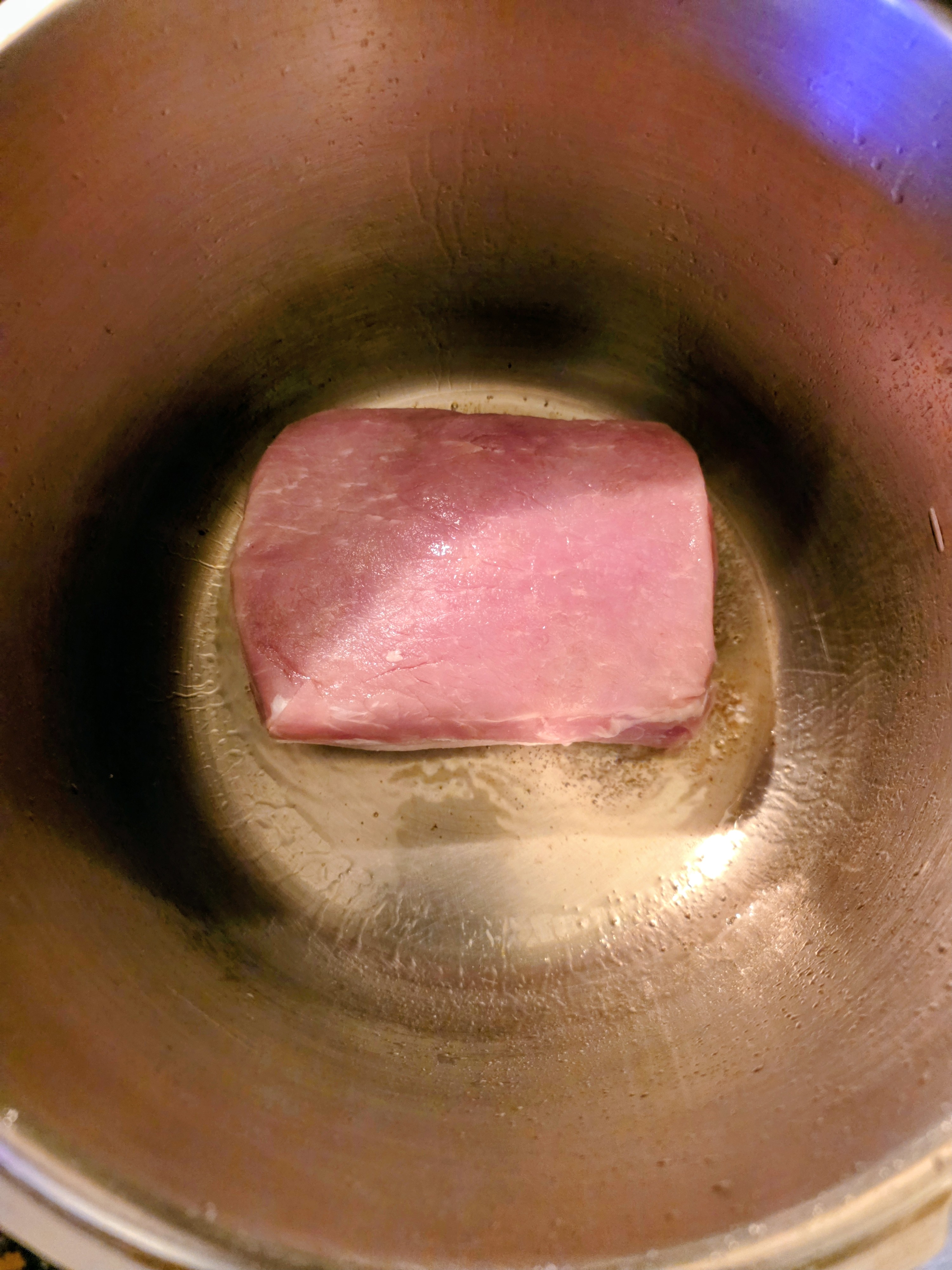
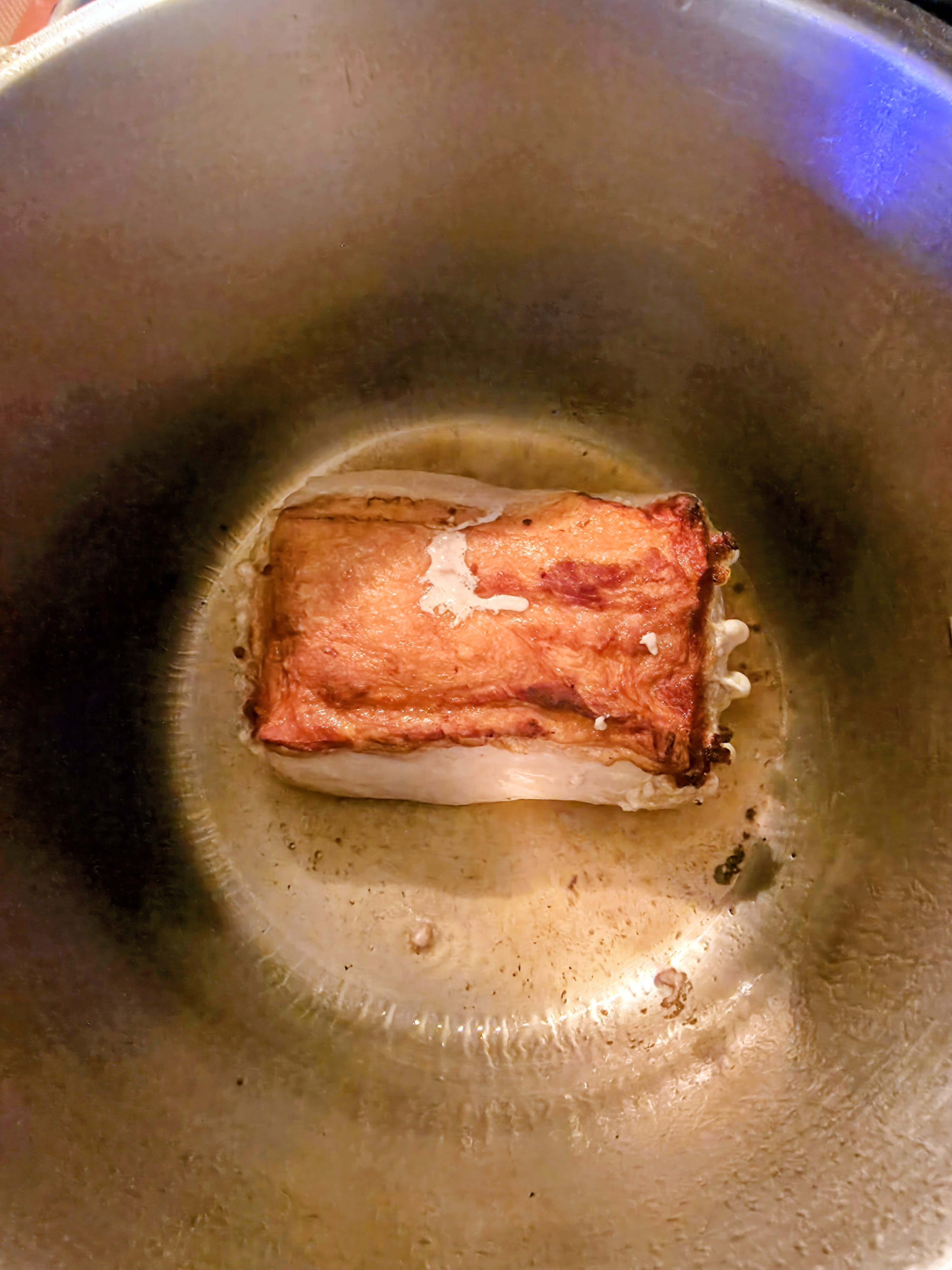
Importantly, we are NOT adding any salt at this point, which we’ll explain in a minute. Once the roast is browned, we can throw in our aromatics:
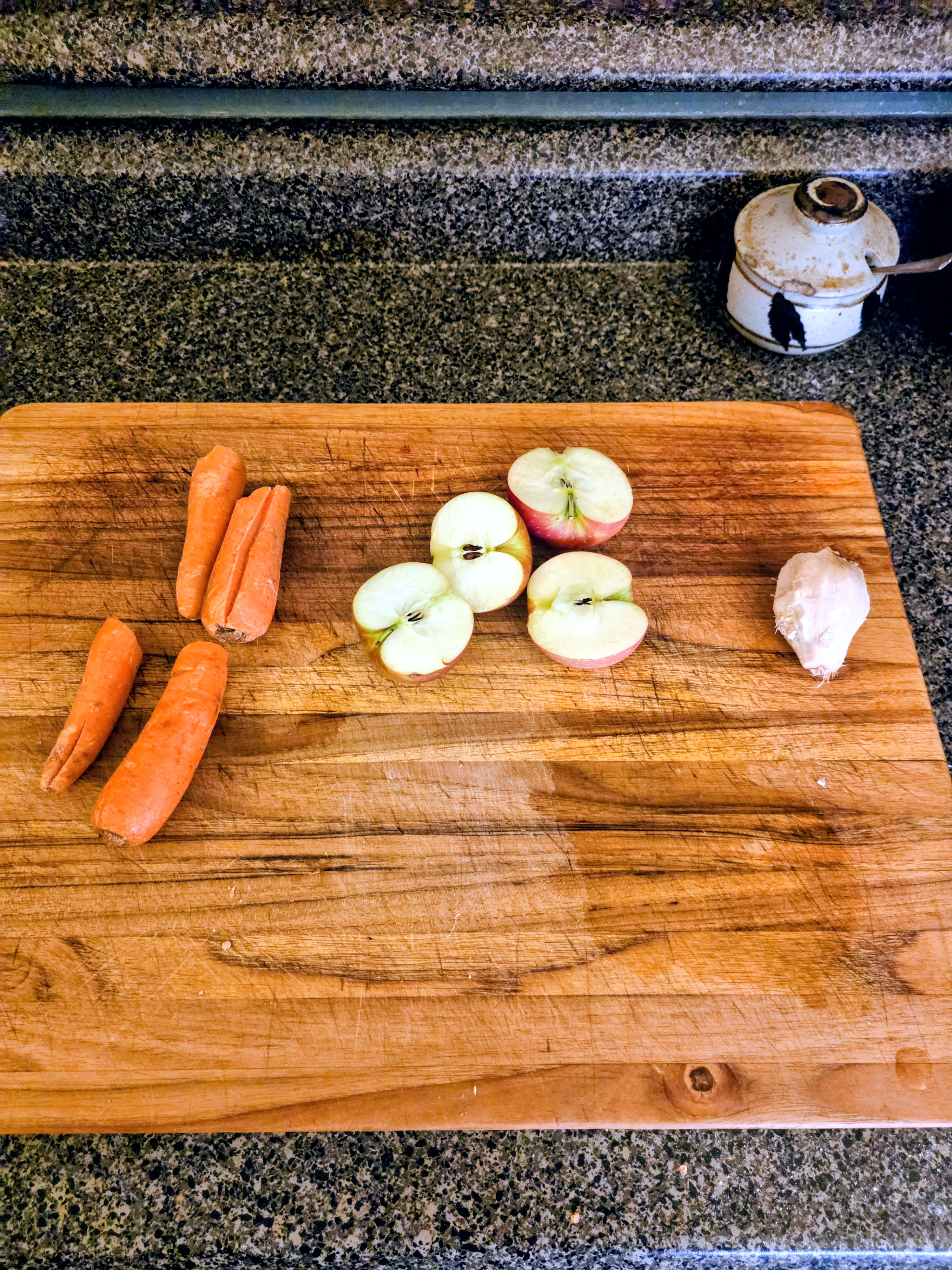
As noted in the ingredients list, we’re using carrots, apples, and ginger (I’m using two apples because they were small), and you might notice there’s no onion. I don’t know why, but for some reason adding an onion to this stock puts off a really unsettling “locker-room” smell, so fair warning if you decide to go rogue. Besides, there’s onion in our slaw.
Anyway, everyone in the pool and cover with water:
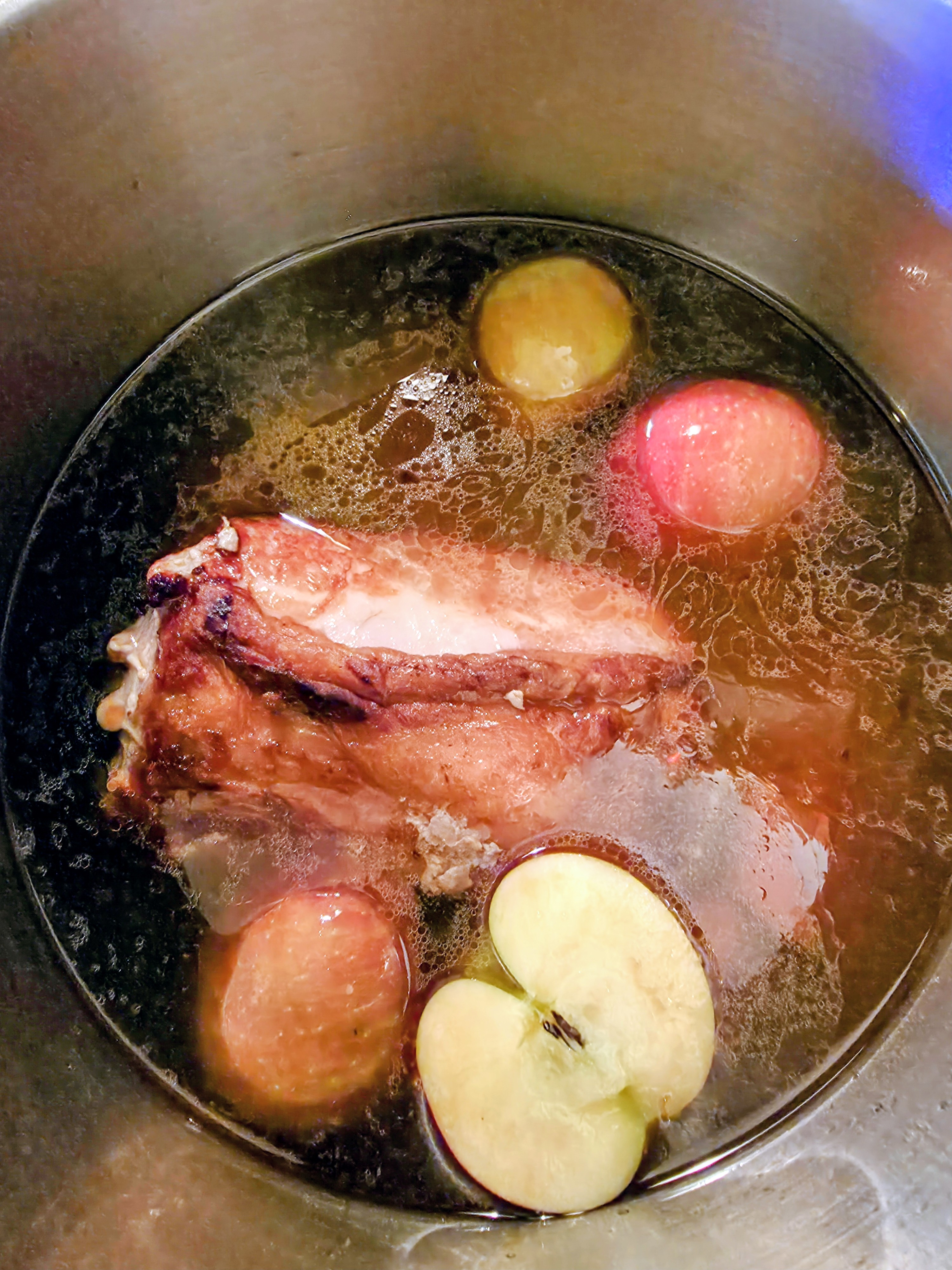
Bring this up to a simmer, and let it ride. I’m using a pressure cooker, which means I’m looking at about an hour of cook time once under pressure, plus the natural release. You can absolutely do this on the stovetop with a stock pot, or braised in the oven if you have a lid, but you’re looking at something closer to three (3) or four (4) hours to get where we want to go. In that case, it’s a perfect lazy Sunday meal and will make your entire house smell like ginger and apples. Just be sure to keep an eye on the water levels to replace whatever evaporates out. When the pork shreds easily with tongs or a fork, remove it and, well, shred it:
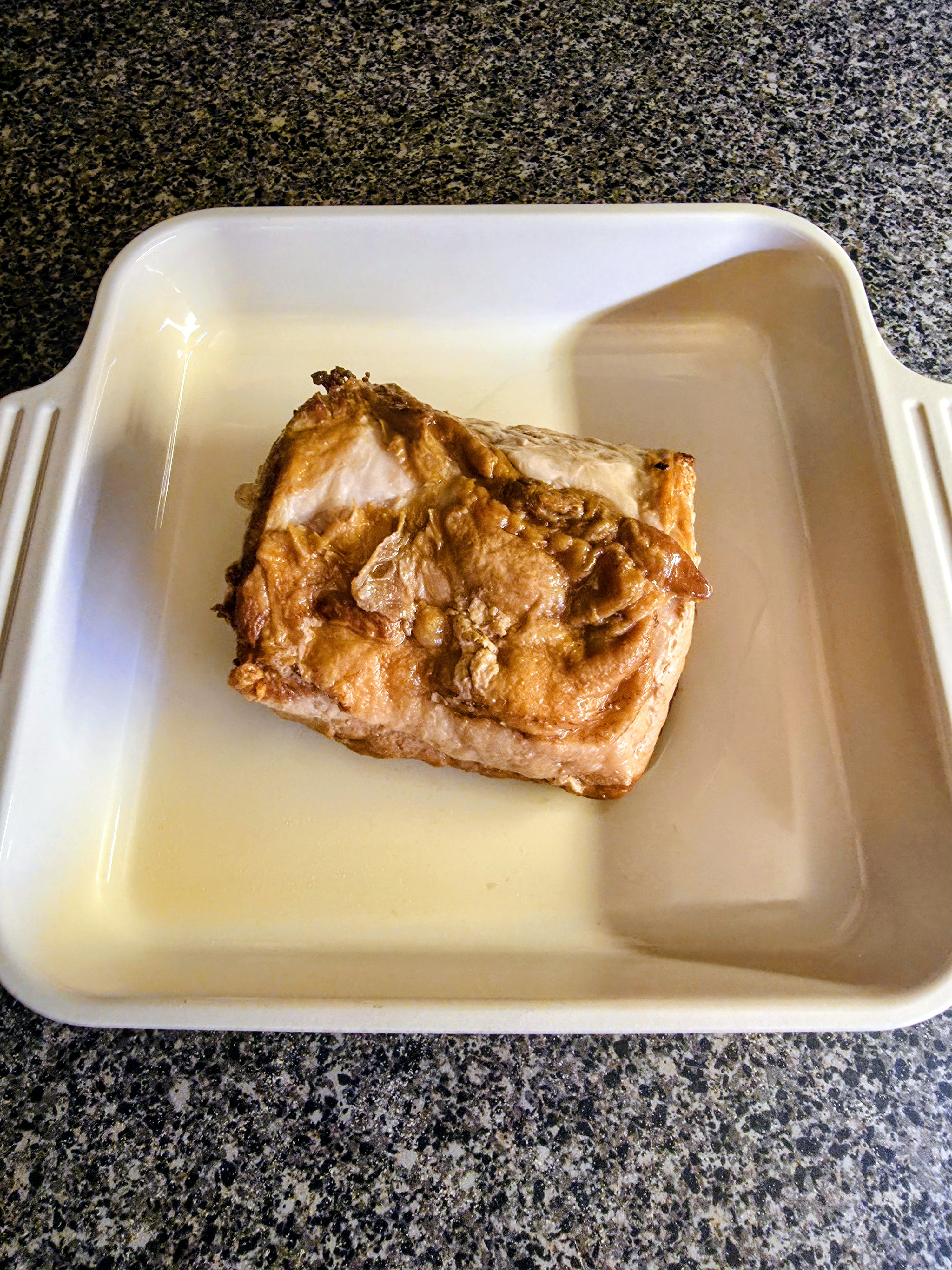
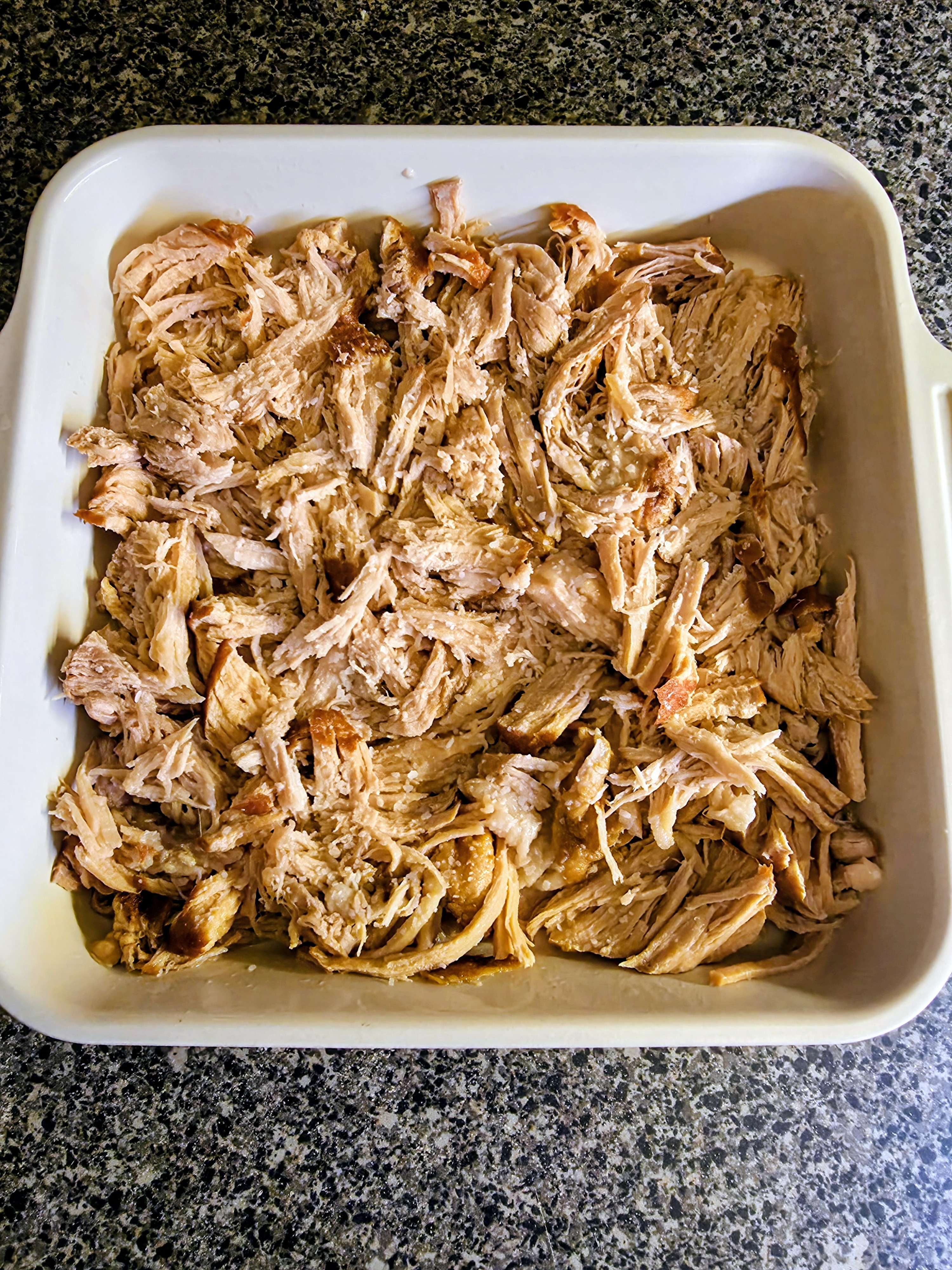
So, remember how we haven’t added any salt to this yet? We’re about to pull a two-part magic trick. First, a pork roast is big and round with a low surface-to-mass ratio. What that means is it’s REALLY hard to get seasoning all the way through it, versus just on the outside. In the past, we’ve pulled dirty tricks like using a brine, but in this case we now have uniform, completely exposed shredded pork that we can season directly. So just salt this to taste.
The second part of that trick comes when we strain the leftover stock:
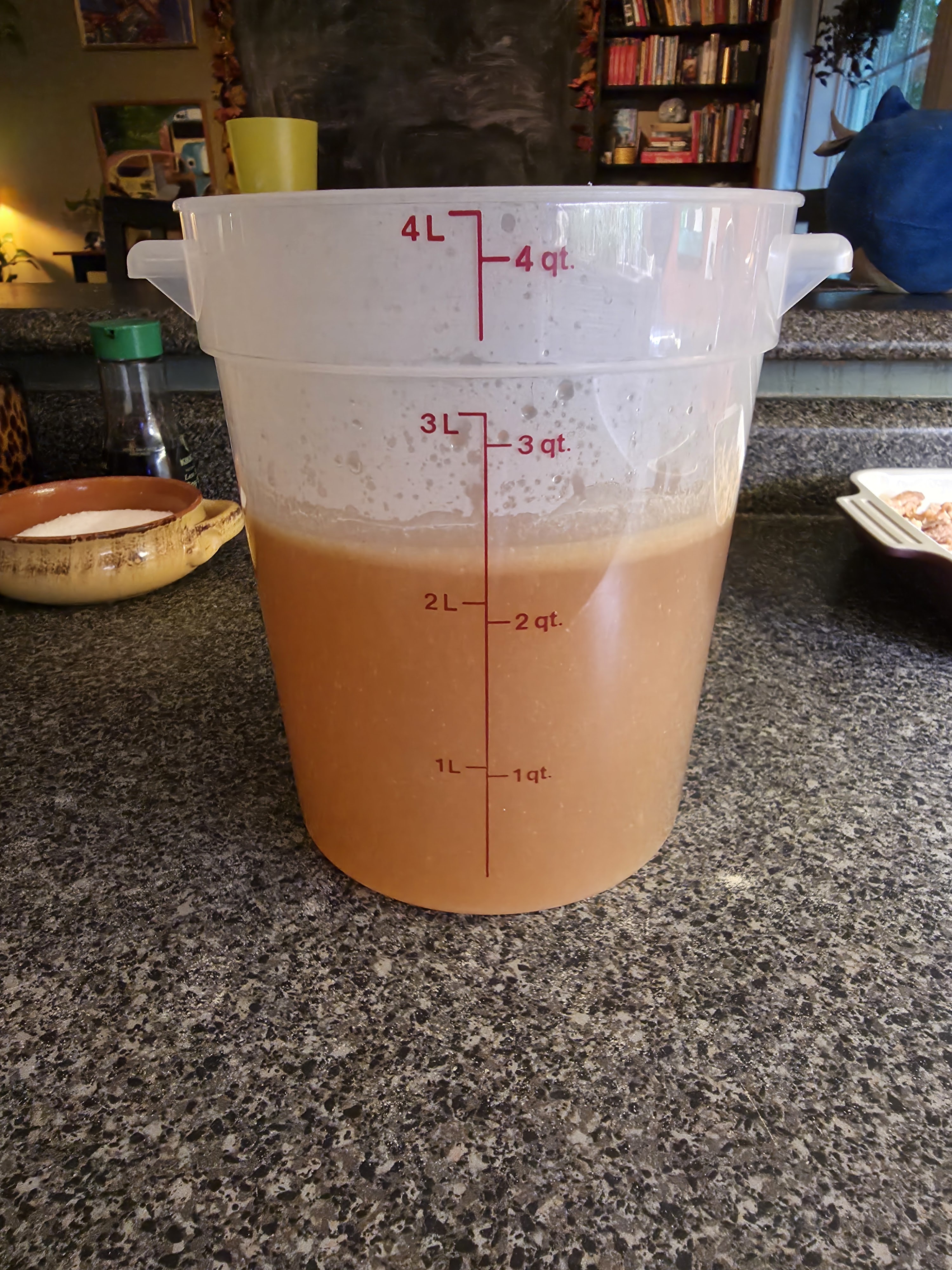
Abra-cadabra, the $2.00/lb pork roast just became a half-gallon of beautiful, aromatic but blank stock. By keeping the salt out of this, we can reduce it as much as we want without it becoming too salty, and likewise we can add it to other dishes which might already have plenty of salt content without fear. This stuff is great for a ramen base, or white bean soup, or reduced down to a glaze for carrots, and on and on. Whatever you don’t use for this dish will freeze like a champ. But, for now, we’re going to use some to make our jus.
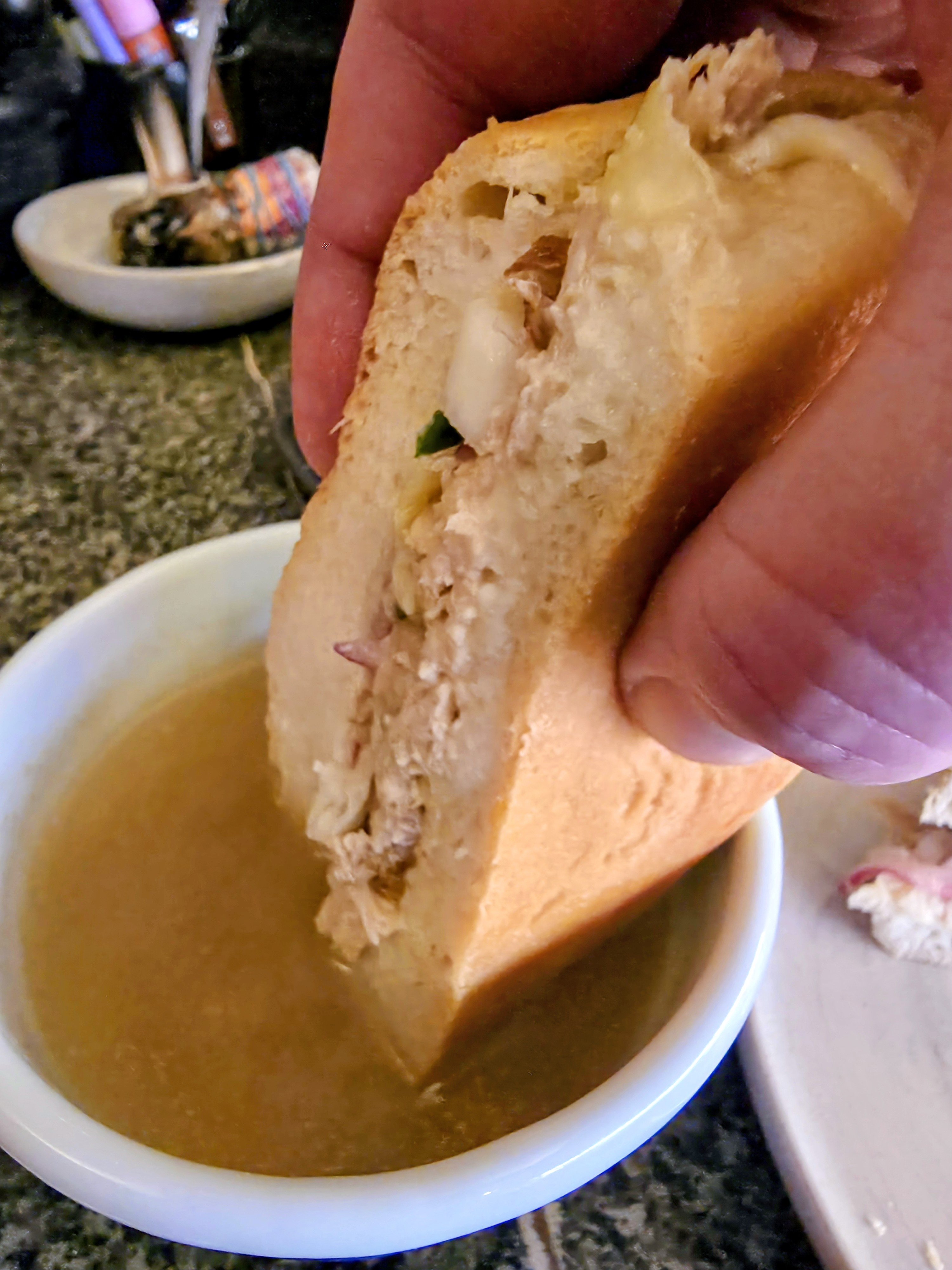
The process is really, really simple. Portion off as much as you’ll be serving (plus a little extra) into a smaller saucepot, and bring it up to a simmer. Season with salt, a little sugar, and a very, VERY little bit of vinegar until you get it where you want it. if you go too far in any direction and it gets too sweet or whatever, you can always add a little more stock to balance it back out. Go slow, and make sure each addition of salt or sugar is fully dissolved before you taste it. Oh, and you might be surprised how little sugar and vinegar this needs to really pop. Lastly, remember your end goal is something a sandwich will be dipped in, not a soup you’re eating a bowl of, so it’s a good idea to make it more intense than you might initially think.
Once you have your jus seasoned and balanced, ladle some over your shredded pork and watch those fibers soak it up. The end result should be a juicy, shockingly delicious crock of shredded pork ready for sandwich duty.
Speaking of, go ahead and split your rolls and top with that mild white cheese:
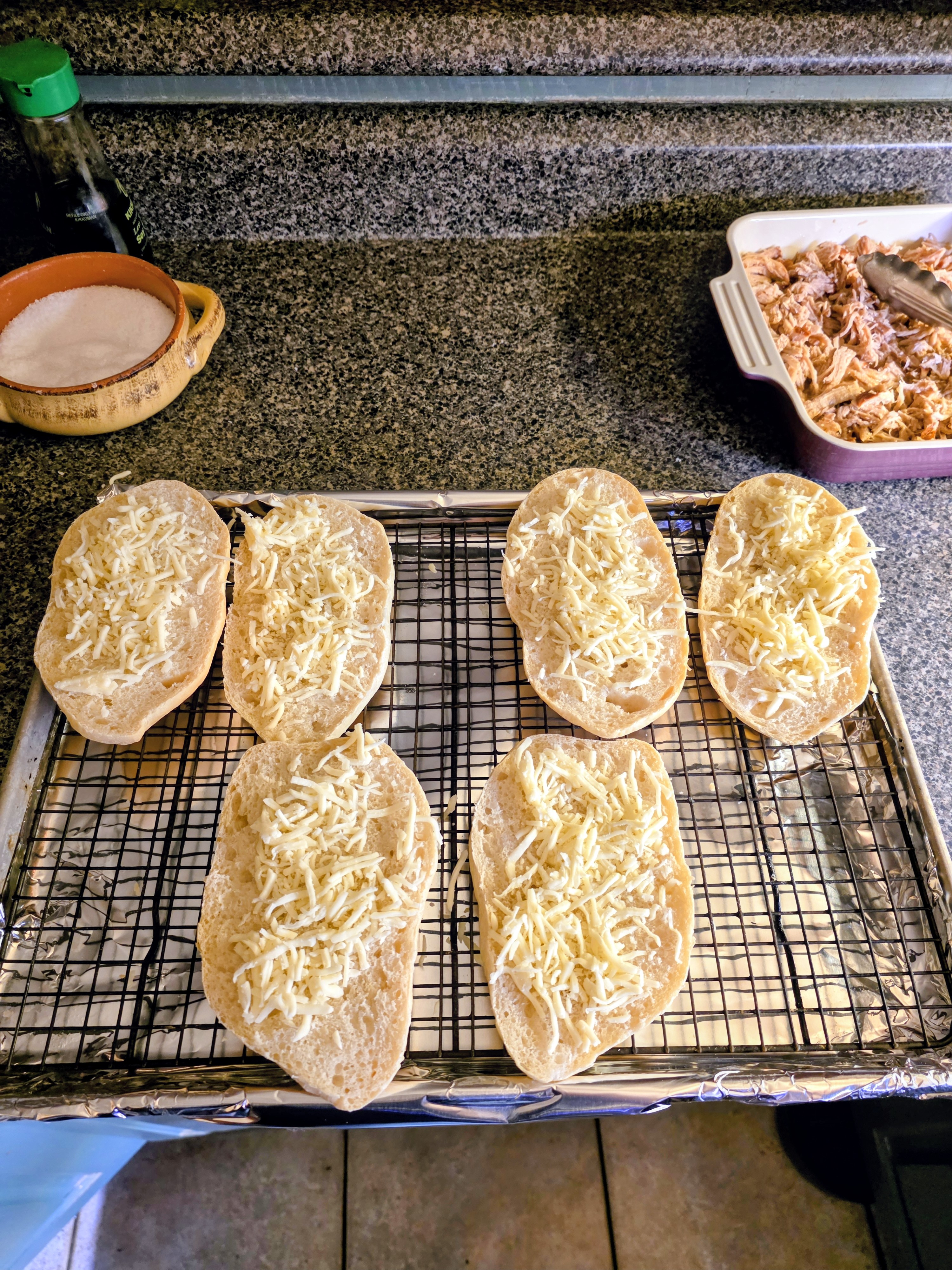
I know, I know: cheese with pork? Well, yeah. Hey, it works for ham and cheese. Really, though, the reason we’re using a mild white variety is because we’re looking more for a textural component than a lot of additional flavors. Toasting the bread in a 500F oven while the cheese melts provides an extra silky-ness to the final product while also giving us a sort of waterproof barrier inside the sandwich to make sure we don’t disintegrate.
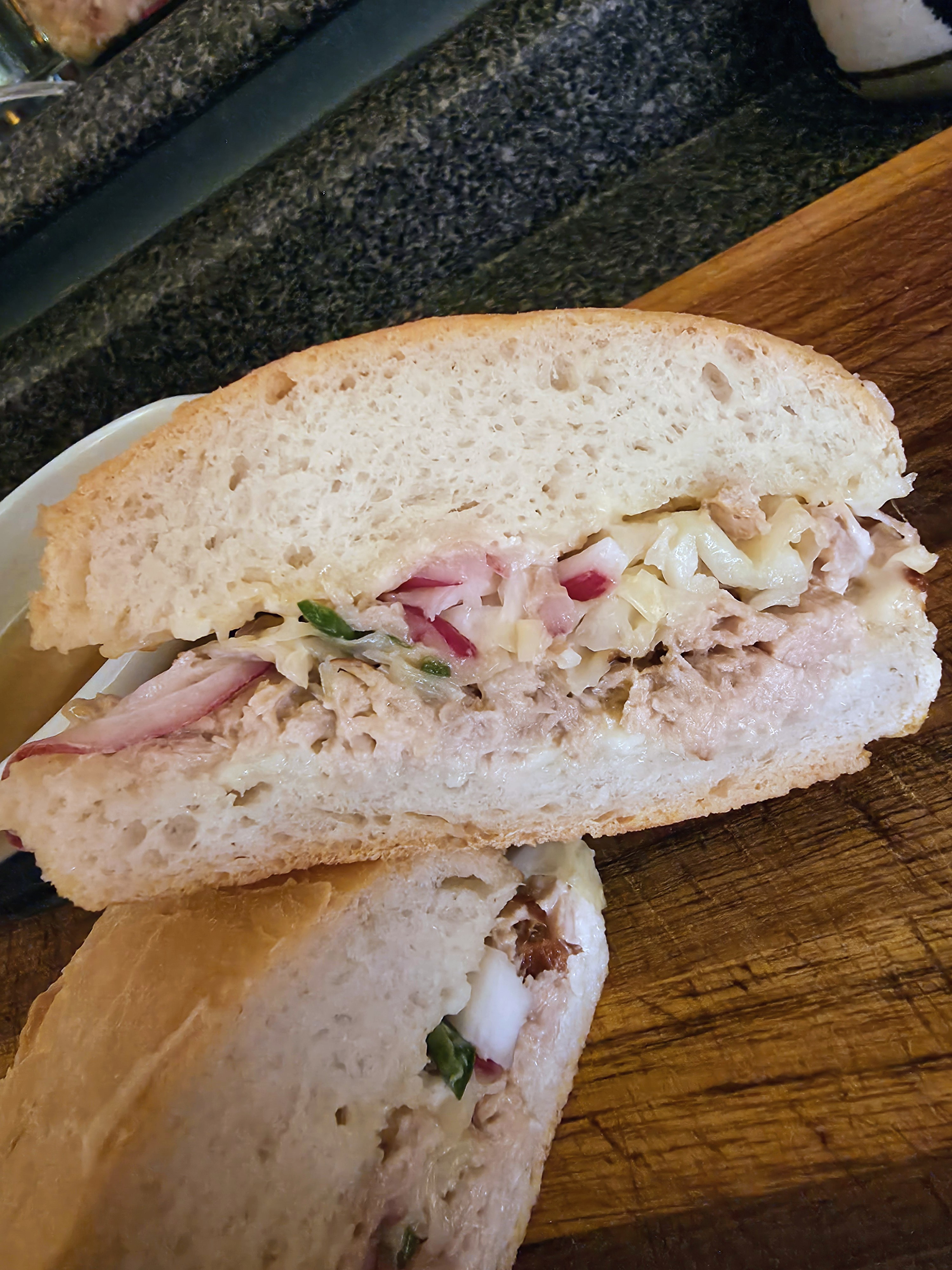
From here, add a light spread of mayo (homemade preferred), our sweet-and-sour serrano slaw, heaps of our juicy pork, cut it in half and serve with piping-hot jus. Cheap, hearty, delicious, and the added benefits of stocking the fridge with some extra goodies to use later.