#RecipeUpTop
- 2 bags “small red beans” or kidney beans;
- 1 quart stock (chicken, beef, or veg);
- 2 lengths of andouille sausage (the “horseshoe” package);
- 1 green bell pepper;
- 1 white onion;
- 2 ribs of celery;
- Cayenne pepper (to taste);
- Salt (kosher or seasoned);
- Hot sauce (to taste);
- Green onion (optional);
- French Bread (optional);
Method: Place beans in a large container and cover with twice the volume of water, and allow to soak overnight. The next day, slice the sausage and brown in a large, heavy-bottomed vessel, then remove. Sweat the aromatics in the rendered fat (adding some neutral oil if need-be), drain the beans and add, as well as adding the reserved browned sausage. Season liberally, and add stock plus additional water as needed. Simmer until the beans begin to break down (which can be aided with a potato masher), resulting in a thick and creamy texture. Taste and adjust for seasoning as desired. Cook rice with desired method when ready for service. To serve, portion rice, cover with red beans, and garnish with hot sauce and green onion (optional).
The Details
On today’s episode of Cauldron Kitchen, we’re tackling the king of comfort foods. This one should be familiar to most, but is attempted by surprisingly few. It’s dead-simple, about as cheap as you can get for a complete meal, and is wrapped-in-a-blanket-by-the-fire in a bowl.
Traditionally, this was a “Monday” dish, but given time requirements for a normal person, it really is a weekend project. Once the weather starts to turn here on the mountain, we make a big batch about once a month, portion and freeze it, and have easy weeknight suppers for weeks (it freezes and reheats like magic). Plus, there are few greater joys in life than snoozing on the couch with football in the background and a pot of red beans simmering away on the stove.
Step 1: The Beans. As you might imagine, the “beans” part of “red beans and rice” is pretty important. Dried beans are necessary here both to keep the “tinned” taste out of the dish, but also because the cooking process is the entire point. Canned beans are already cooked during canning, and lose some of the starchy magic we need to pull this one together. Also, dried beans are still cheap and will last in your pantry forever, so there’s really no reason to skip the bean aisle at the market.
As to the beans themselves, you *can* use red kidney beans, but really you’re looking for “small red beans.” If you can’t find them, no big deal, but if I can get them in Blue Hill, Maine, your local grocery store probably has a few bags, too.
Get ’em home, and get ’em soaking:
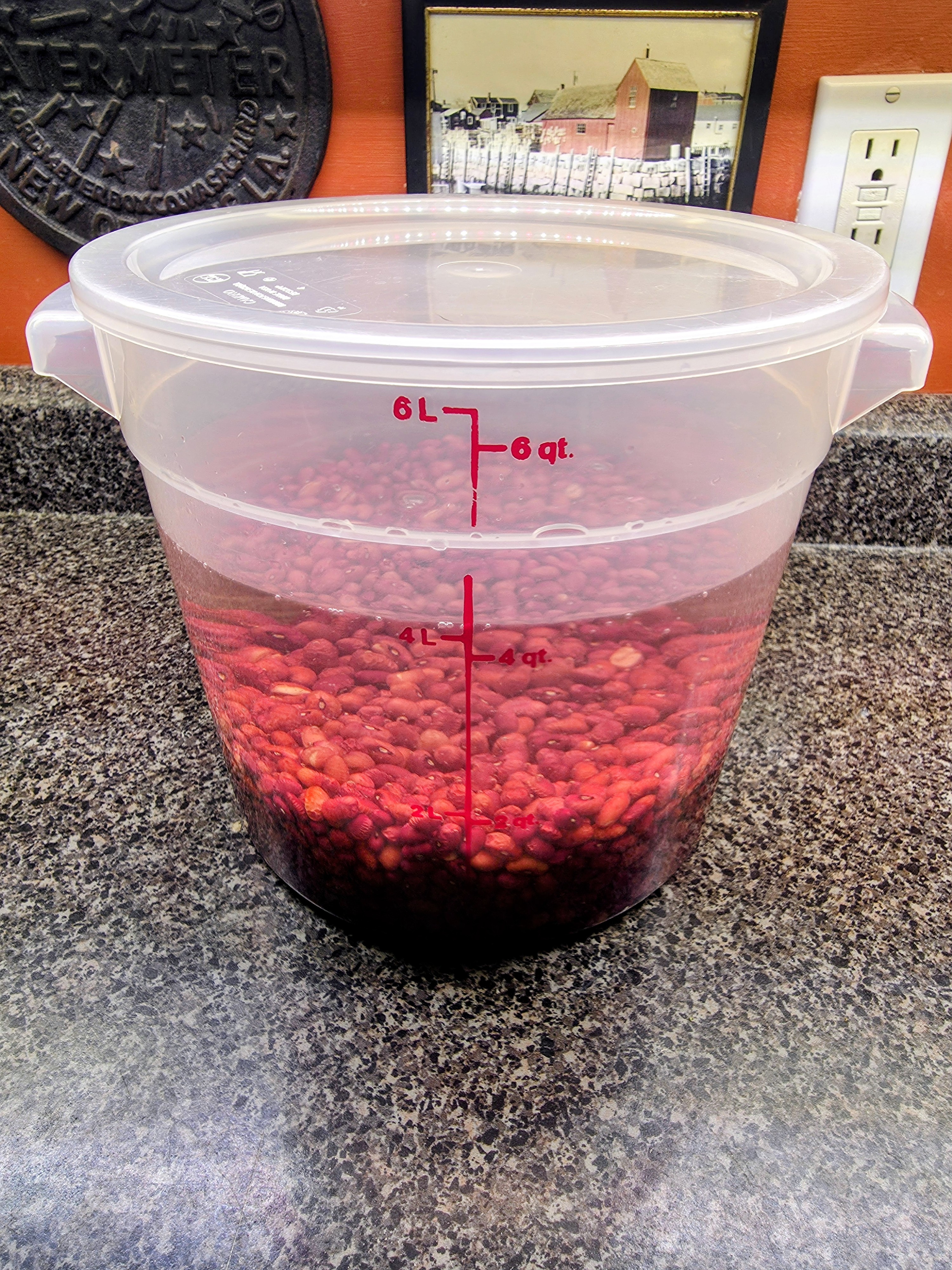
You want to cover them in about double the volume of water so they have room to expand. Let these sit on the counter overnight:
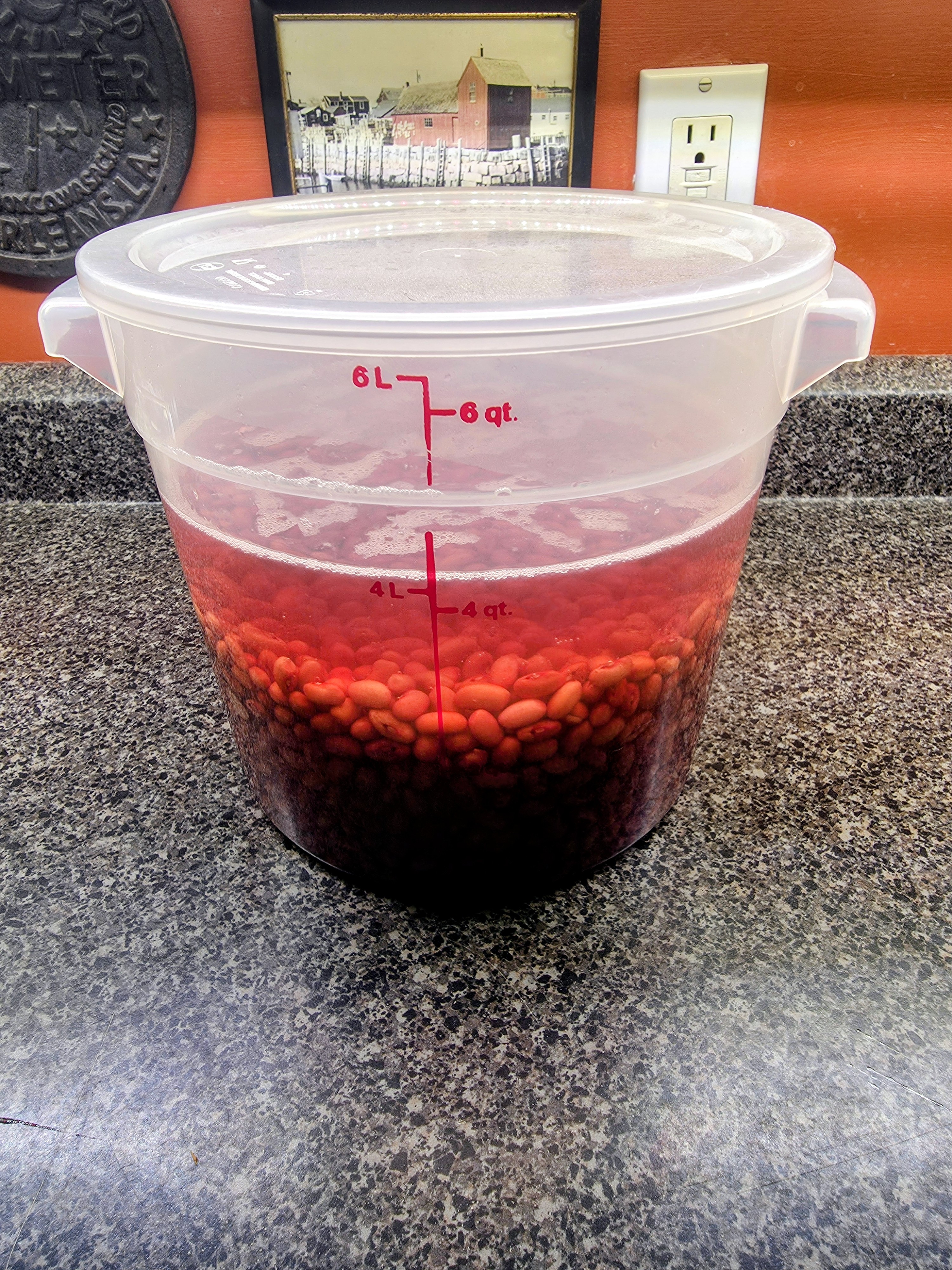
You can drain these now if you want, or wait until they’re ready to go in the pot. It doesn’t really matter. Speaking of…
Step 2: The Pot. I’m not a stickler for specific cookware, but there are some basic rules we’ll need to follow for this one. First, we’re looking for a pot big enough to hold everything. That might seem obvious, but even though these beans have expanded from soaking, they’re going to grow even more. That, plus the extra ingredients like sausage means we want to be sure we have plenty of room to work. I’m not ashamed to admit I’ve had some…incidents where I’ve watched in delayed horror as the red beans started to approach the rim of my pot because I’d chosen poorly.
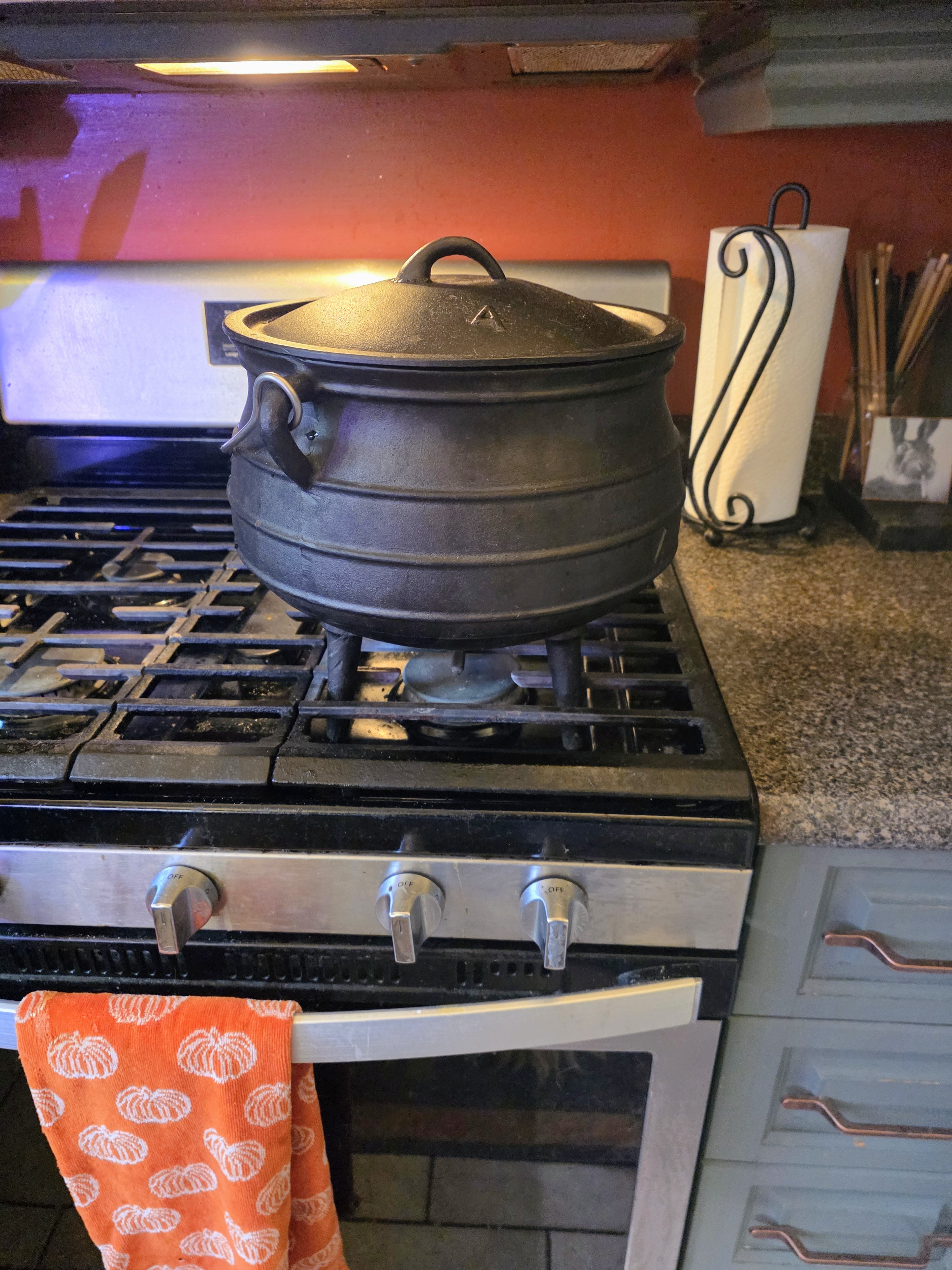
Second, we need something heavy-bottomed that won’t scorch. Though this starts fairly thin, by the time we’re approaching done we’ll be dealing with bean starch and other solids that will want to collect and burn on the bottom of your pot, so keep an eye out there. Cast iron (either enameled or not) is always a safe bet, and today we’re going with the four-gallon cauldron:
Step 3: Render and Sweat. The sausage is up first, and in the browning process, will render out some seasoned fat we can use to sweat our aromatics. As noted in the ingredient list, we’re using andouille in those horseshoe links:
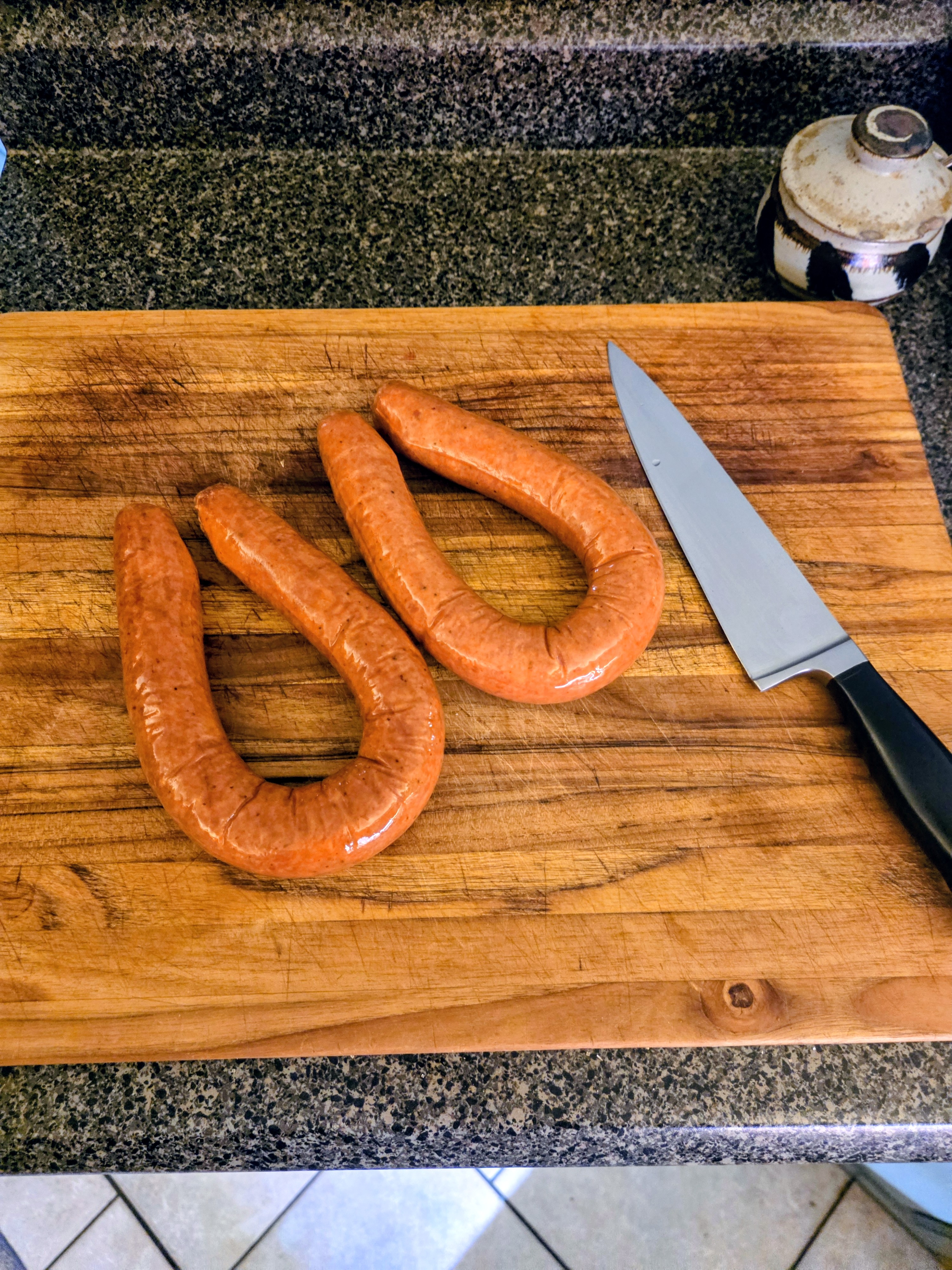
A simple slice into bite-sized (or thereabouts) pieces, and into the pot on medium-low to sizzle and brown.

While that’s happening, we can break down our Holy Trinity:
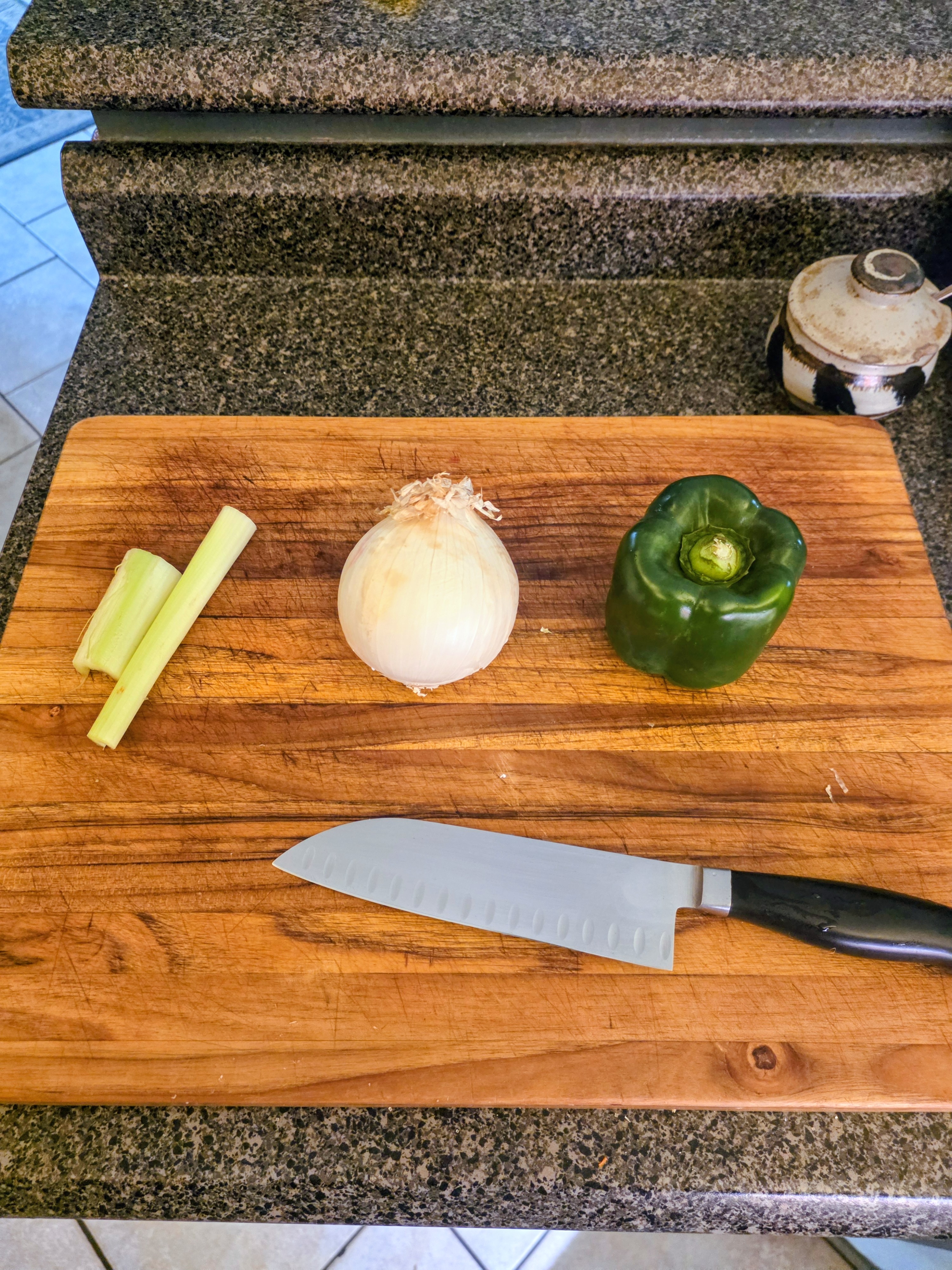
This combination of green bell pepper, celery, and onion is the backbone of a ton of Cajun cooking, and is a kind of modified French mirepoix of carrot, celery, and onion. Anyway, dice it up. Note: while you don’t have to be too precious with your cuts (this is going to cook so long, the veg will all break down) to don’t want to be hyper sloppy either, and we’re not going to be blending, so huge chunks of stuff can be problematic:
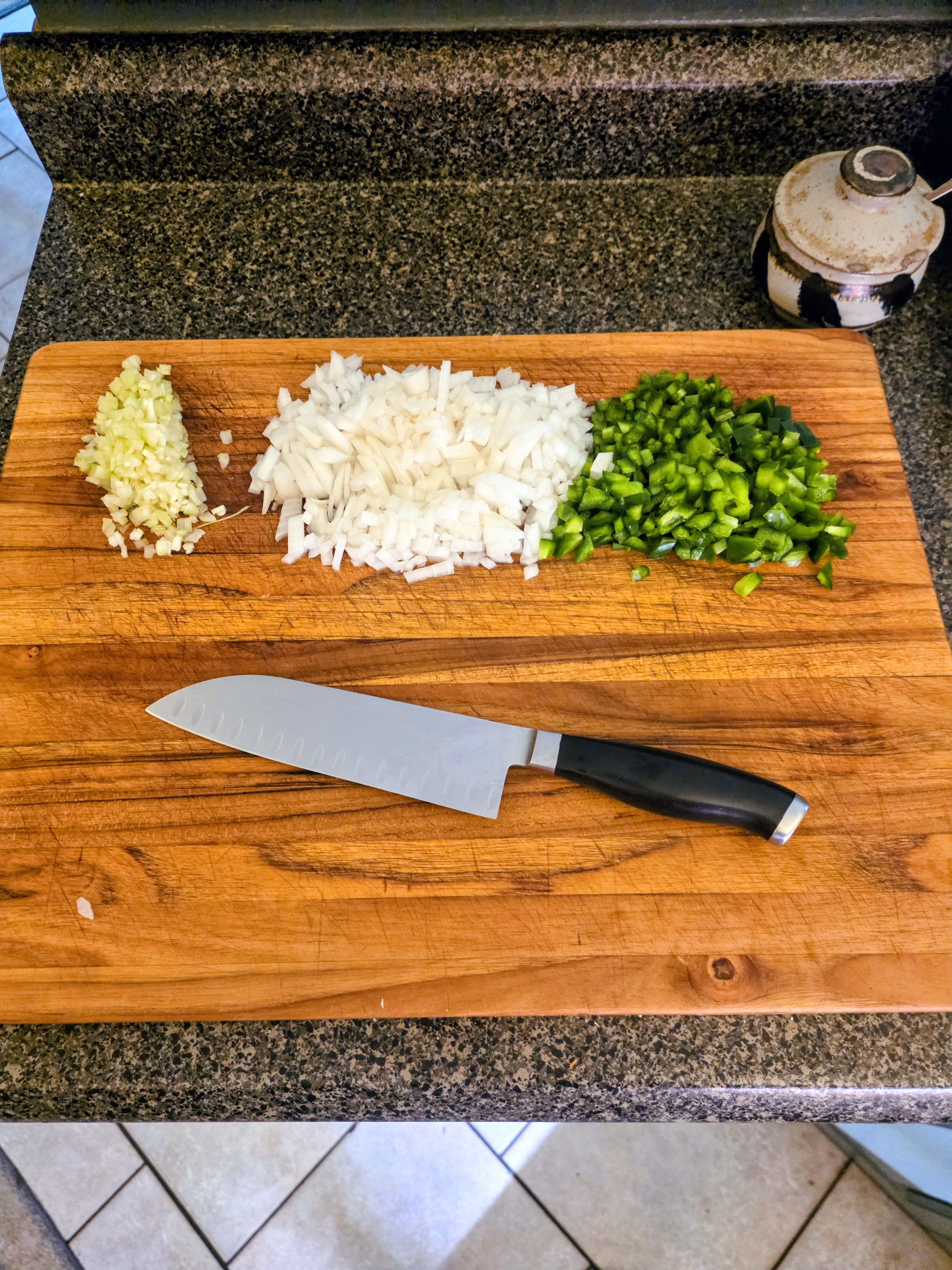
Into the pot to sweat, with a little extra neutral oil if needed, and season liberally.
Ah, right. Seasoning. You absolutely can make this with basic kosher salt, and typically that’s the sort of thing I’d advocate for. Simple, clean, cheap, and build your flavor from other ingredients. THAT SAID, there are only three (3) off-the-shelf seasoning blends I keep in my house: Lawry’s Seasoned Salt; Old Bay; and this:
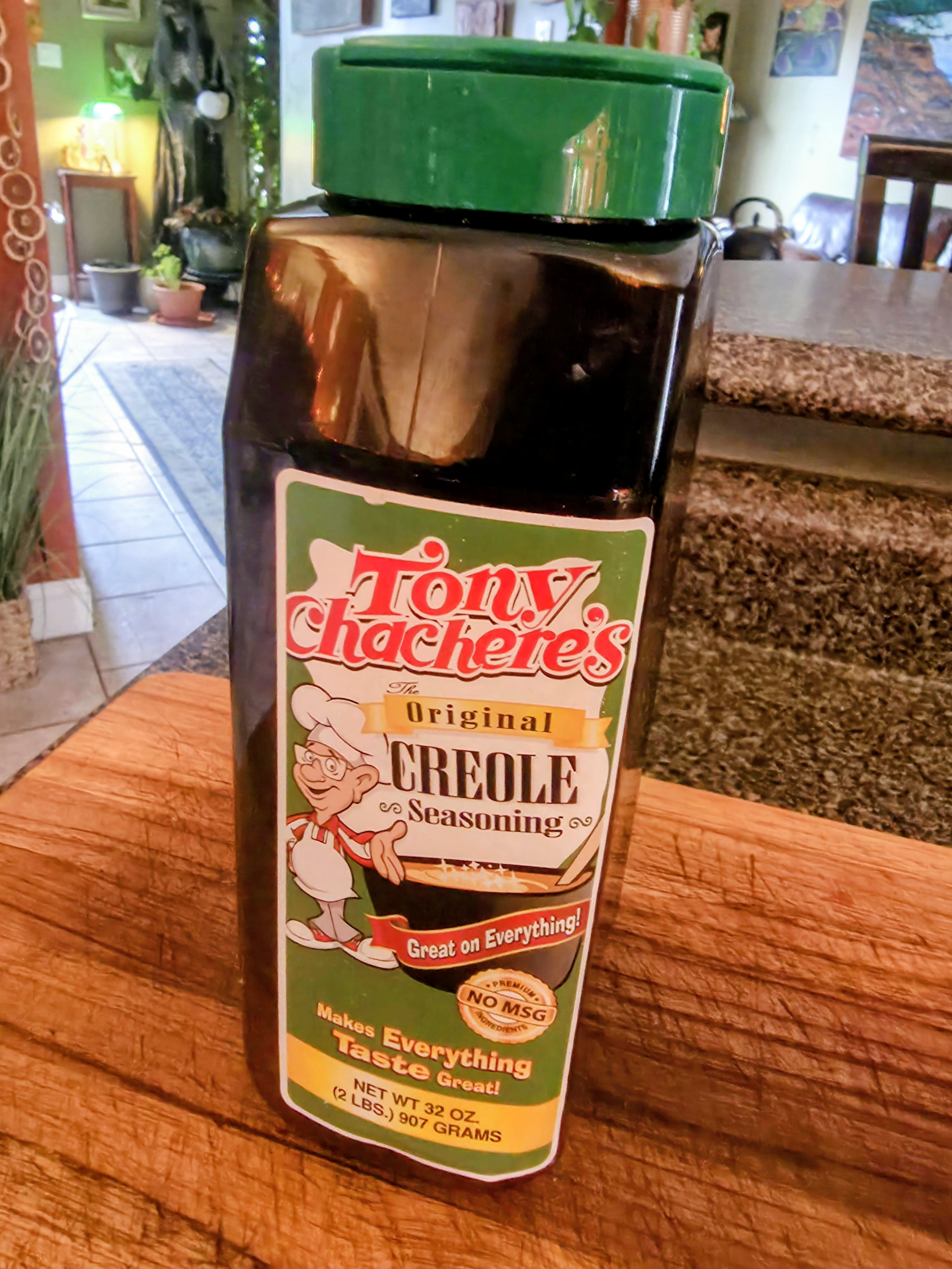
And yes, I buy it in bulk. It really is hard to beat for red beans and rice, and worth the extra pennies. In addition, now is the time to add your first dose of cayenne pepper if you’re so inclined. My only advice is to go slow here, as you can always crank it up later, and some of the moisture is going to come out of this dish during cooking which concentrates the flavors (and heat), so what might taste perfect at this juncture might be a salty fireball by the end.
Step 4: The long simmer. Drain your beans if you haven’t already, and add them to the pot. Return the sausage, add your stock, and cover with extra water if needed:
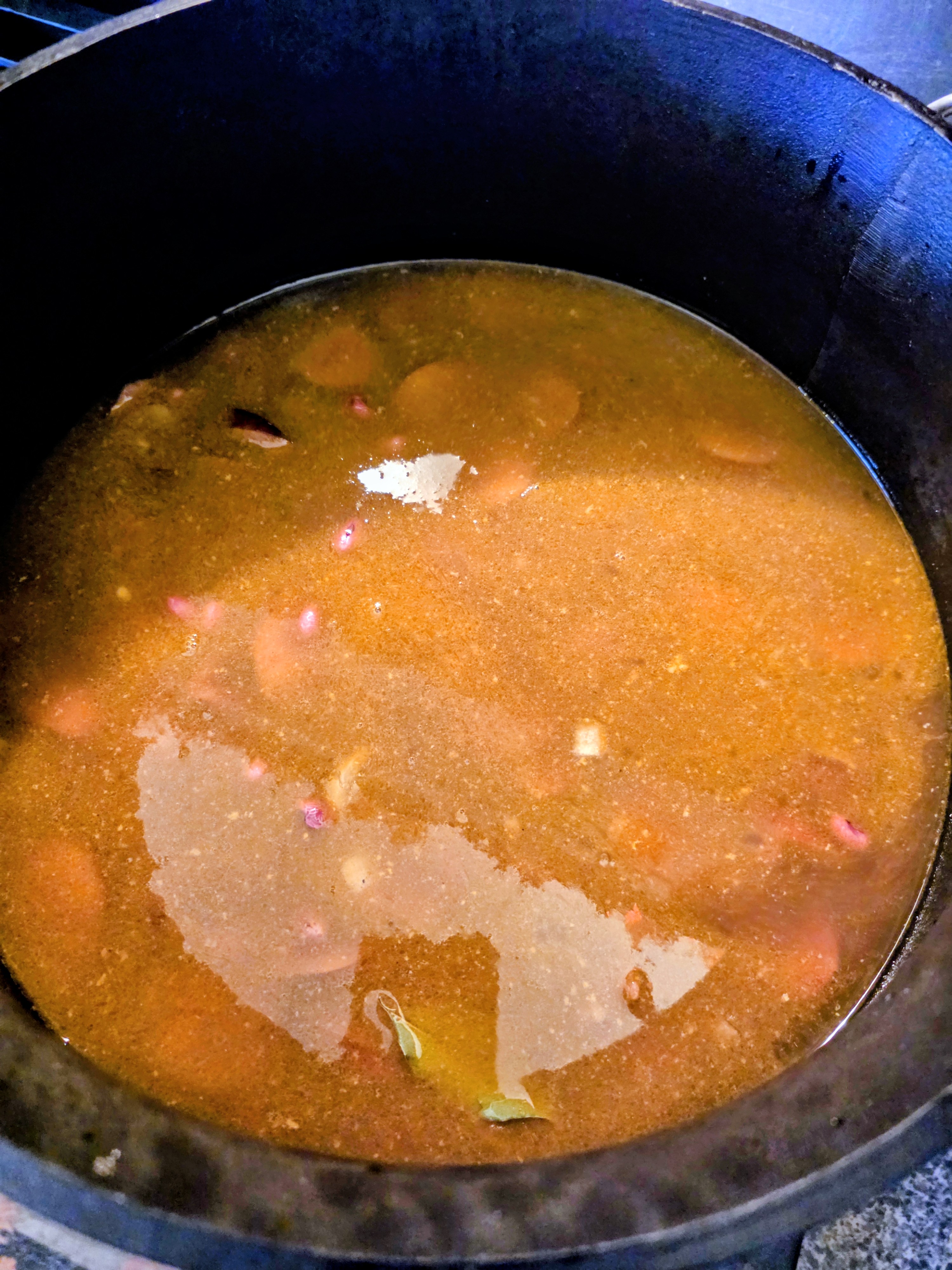
It’s not much to behold at the moment, but bring this up to a simmer and check back in on it every half hour or so. Note: you don’t need to use a lid for this, but if you go uncovered you’ll need to keep an eye on evaporation and you want to maintain that liquid level, because:
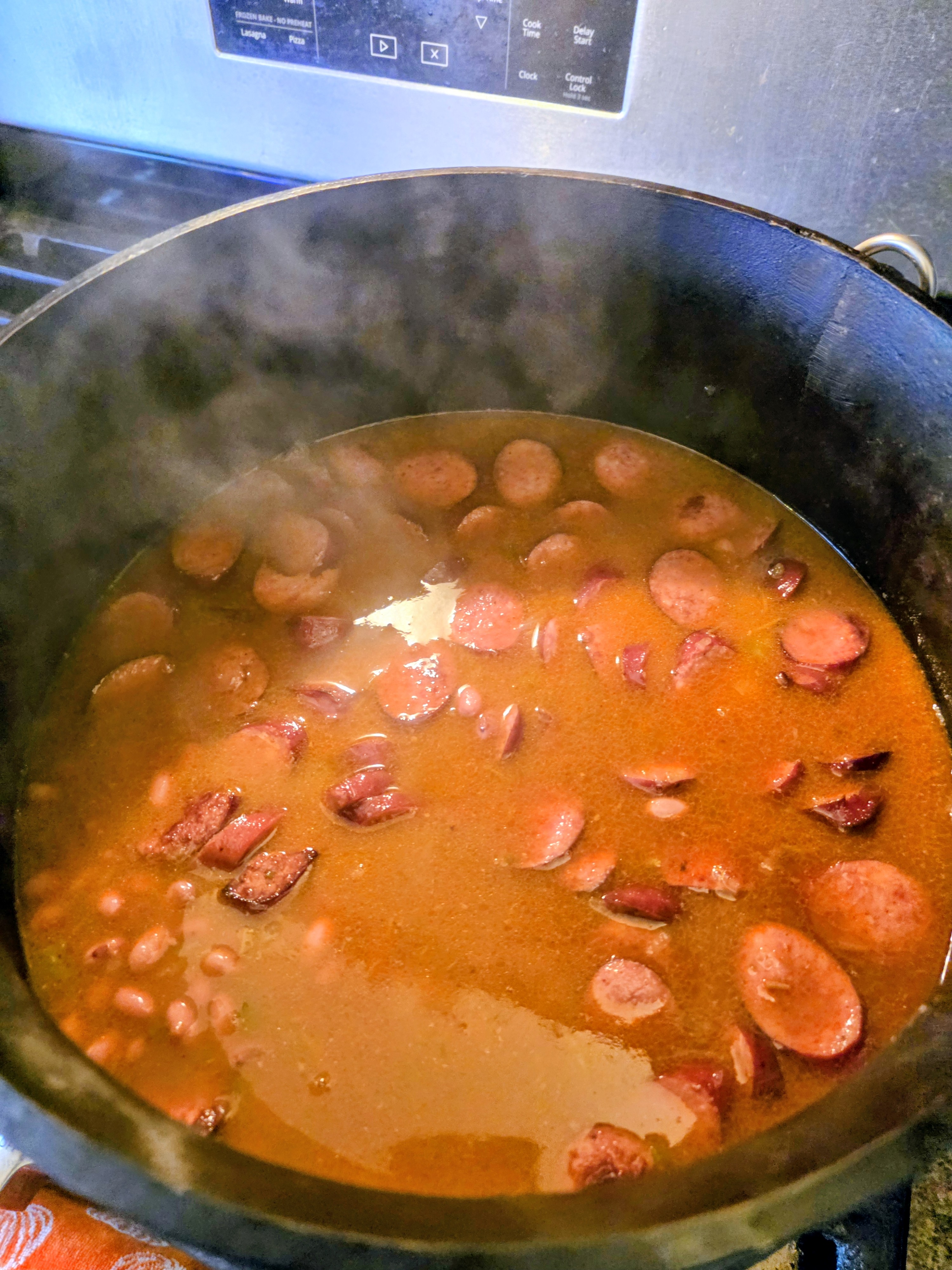
At a certain point, the beans will start to break down and thicken the mixture, and if you haven’t been maintaining the moisture in the pot, it can get REAL thick REAL fast and potentially scorch. So, a little extra liquid is a lot of insurance. Additionally, if your beans are getting soft but don’t seem to be really breaking down, you can use a potato masher to squish a few and it starts a kind of chain reaciton that leads to:
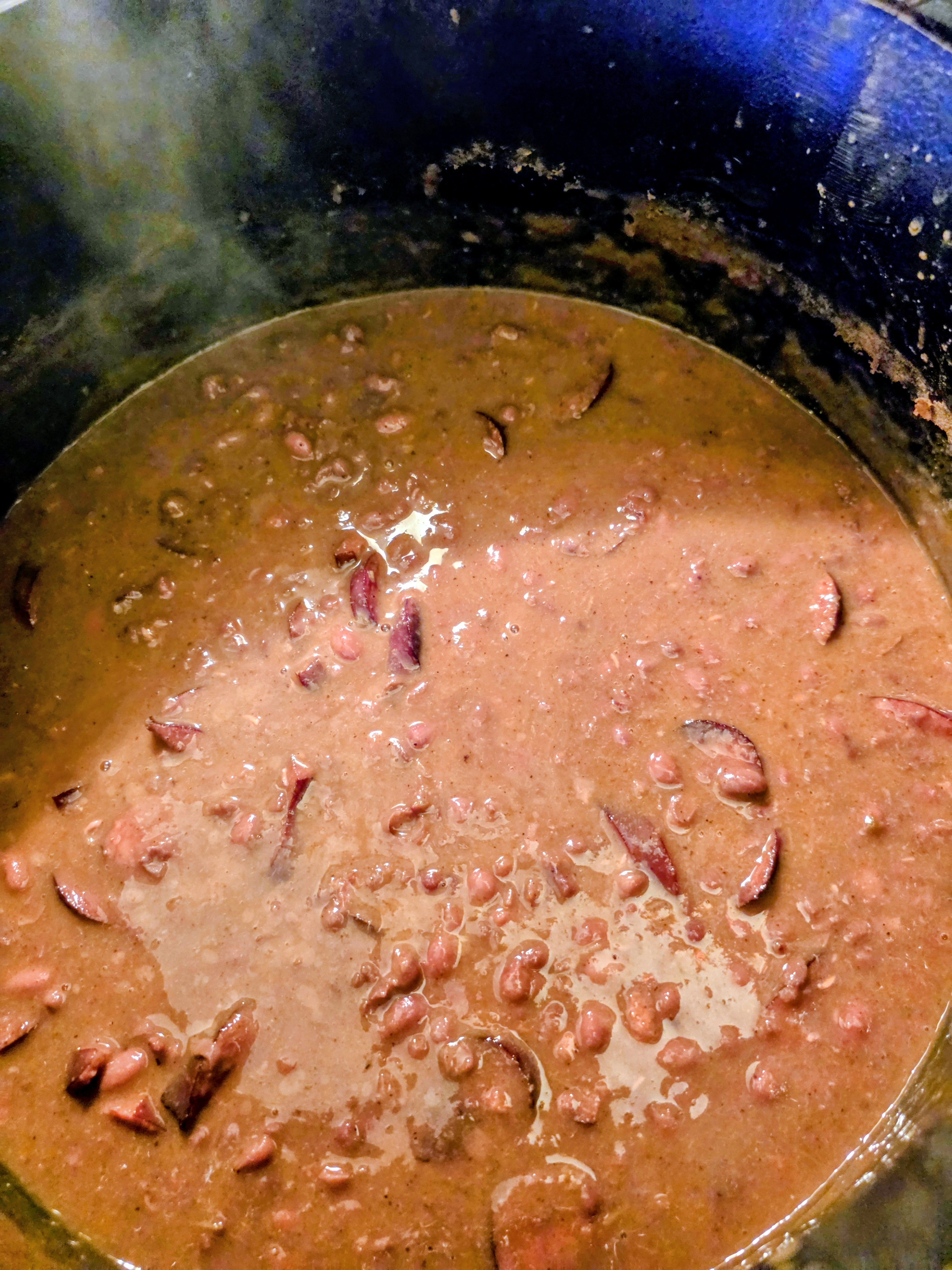
A fully-thickened pot of red beans and rice. Taste it (if you haven’t already) and adjust for salt. At this point AND ONLY THIS POINT go ahead and start your rice. You can use a classic Louisiana long-grain, or get fancy with Jasmine, really whatever you want.
Lastly, even though this is a starchy meal, it’s really not complete without some crusty French bread. You can certainly buy some, but if you want to go the extra mile, we’ve got you covered:

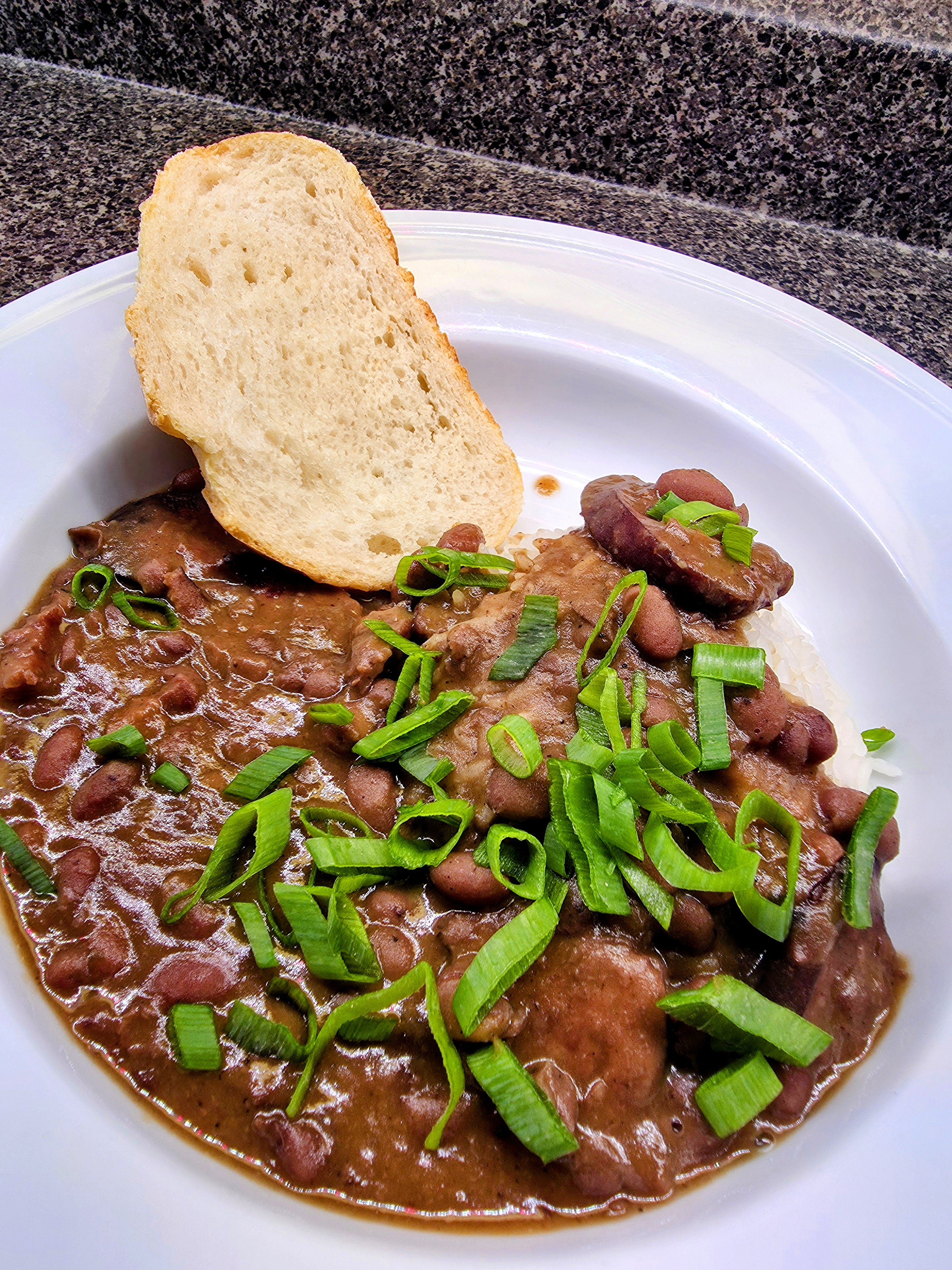
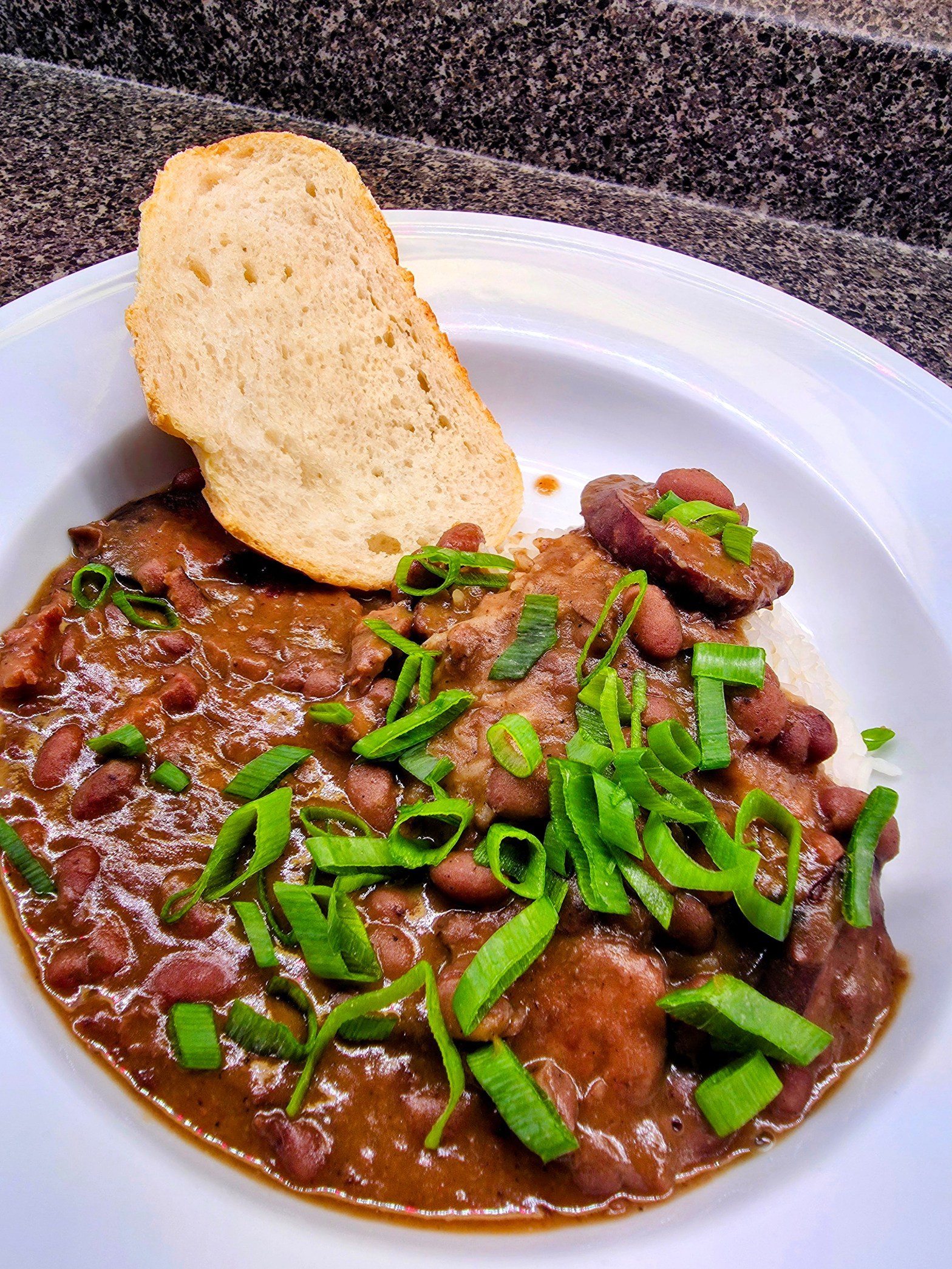
For service, add a portion of rice to your bowl, top with the red beans, add a slice of bread and garnish with hot sauce and green onion. Then get ready for the best nap of your life.